
Introduction
You’ve got the invitation on your fridge, the date circled, and now the real question hits: what are you actually going to wear? Finding the right wedding guest dresses shouldn’t feel like a part-time job, but honestly, it kind of can. One wedding wants black tie at a hotel ballroom in Chicago. The next is barefoot-casual on a beach in Florida. Same closet, totally different rules.
I’ve been the guest who got it wrong. I once showed up to a barn wedding in Ohio in stilettos that sank straight into the grass, and spent the cocktail hour basically aerating the lawn.
This guide will save you that stress — dress codes, venues, colors by season, and shoes and shopping, all covered. You don’t need a new dress for every wedding. You need one or two great wedding guest dresses you know how to style. Let’s figure out yours.
1. Reading the Invitation: How to Decode Every Wedding Dress Code
The invitation is your cheat sheet for choosing wedding guest dresses. Venue, time of day, and exact wording tell you almost everything. My backup rule: the later it starts, the dressier it is. Daytime leans lighter; evening leans darker and more polished.
Black Tie: The Full-Length, All-Out Look
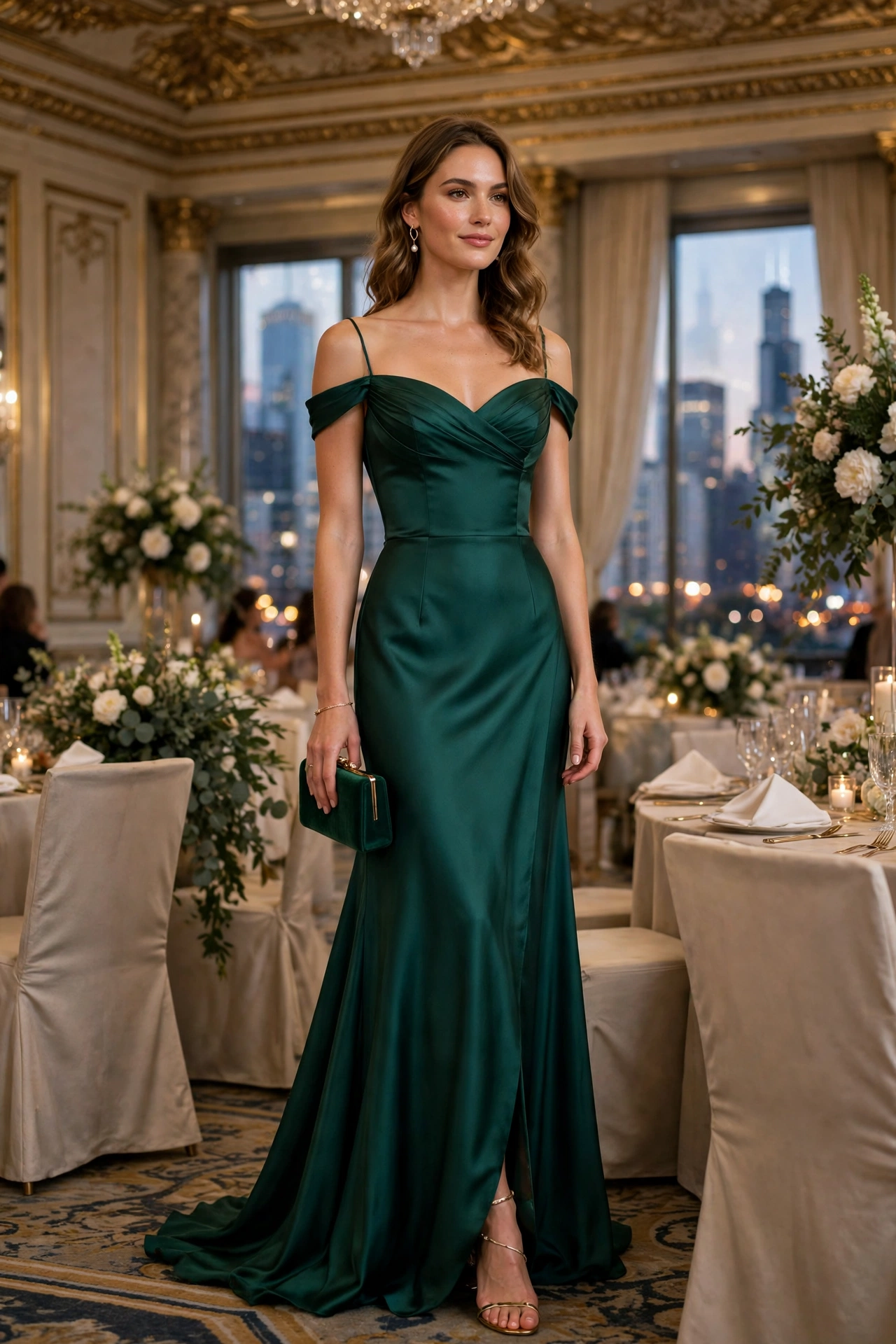
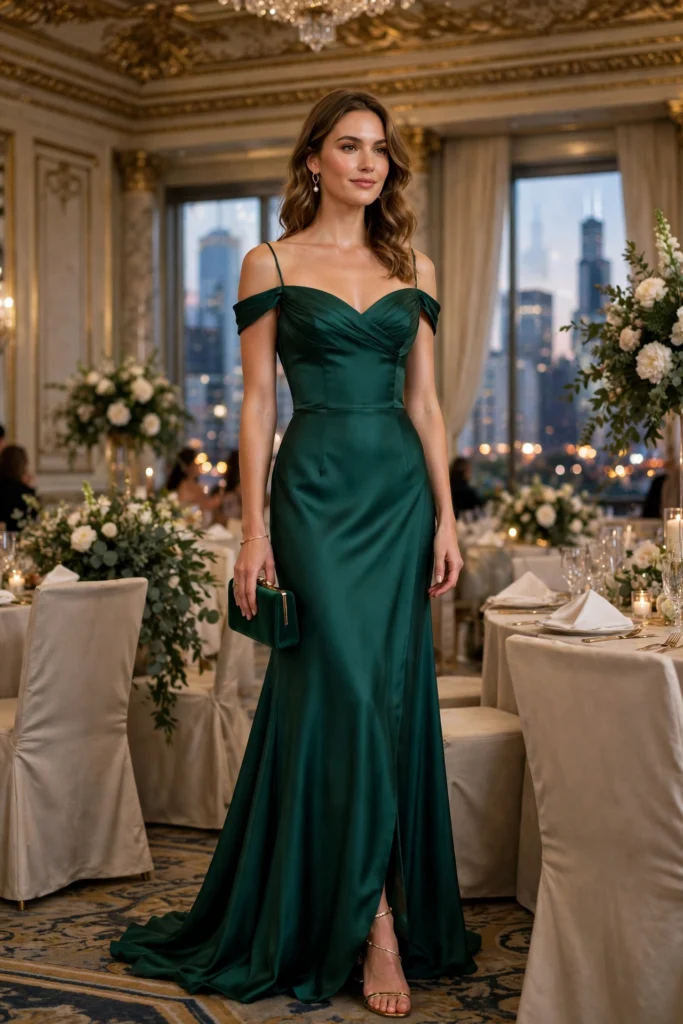
Black tie means a floor-length gown — not a cute midi dressed up with earrings. Choose a fabric with weight and sheen: satin, crepe, chiffon, or velvet in winter. Black is completely fine for guests at a U.S. black tie wedding, despite what your grandmother might whisper, and navy, burgundy, emerald, and charcoal photograph beautifully at night. If it says “black tie optional,” a polished midi in a luxe fabric can work in summer. When in doubt, go longer.
Formal and Cocktail: The Two Codes You’ll See Most
Formal sits one step below black tie: long dresses, plus elevated midi and tea-length styles in satin, silk blends, or structured crepe. Cocktail is America’s most common code, and the most fun — knee-length, midi, and tea-length dresses with room for color and tasteful sequins in Las Vegas or Nashville. Most wedding guest dresses you’ll actually buy live in this code, which is why Best Cocktail Dresses for Women is a useful starting point. Time matters: 3 p.m. in Austin in June means a lighter midi in sage or blush; 6 p.m. in Boston in November means richer shades and sleeves.
Semi-Formal, Dressy Casual, and Just Plain Casual
Semi-formal means polished but not gown-level: a midi in a nice fabric, clean shoes, real accessories. Dressy casual steps down — structured sundresses, floral midis, slip dresses with a cardigan. Casual never means jeans or a tee; a cotton or linen midi with flats is the sweet spot. Still stuck? Check the couple’s wedding website — as The Knot’s wedding guest dress code guide suggests, couples would rather you check than guess wrong.
2. Dresses by Wedding Type and Venue: Matching Your Look to the Place
Dress codes tell you how formal to go; the venue tells you what will actually work. The best wedding guest dresses match the ground you’ll walk on, the temperature during photos, and any rules the venue sets.
Church, Synagogue, and Traditional Ceremonies
For houses of worship, modesty is the headline. Shoulders covered, or at least coverable; hemlines at or below the knee are a safe standard, and high slits or deep necklines are better saved for another dress. The easiest fix is a wrap or lightweight blazer you can remove after the ceremony. I keep a navy pashmina for exactly this — it’s saved me at ceremonies in Philadelphia, Los Angeles, and Savannah. Chiffon, crepe, and lace midis look respectful without feeling stuffy.
Beach Weddings in Florida and Hawaii, Plus Barn and Garden Weddings
In Key West, Destin, Maui, and Oahu, you’re dealing with heat, humidity, wind, and sand. Choose breathable fabrics: linen blends, cotton gauze, and light chiffon that moves but doesn’t fly up. Keep hems clear of wet sand. Skip stilettos entirely: flat sandals, low wedges, or dressy espadrilles are the move. Barn and garden weddings across Texas, Tennessee, and the Midwest want the same practical mindset — floral midis, block heels or polished cowboy boots for grass and gravel, and a light wrap after sunset.
City Rooftops, Lofts, and Winter Weddings
City weddings run dressier and sleeker. For a rooftop in New York, Chicago, or Los Angeles, think clean lines: a satin slip midi with a blazer or a structured sheath. Rooftop wind in Chicago is no joke, even in July, so choose a dress with some weight and bring a tailored coat for after dark. Winter weddings need their own plan: velvet, jewel tones, long sleeves, closed-toe heels, and a real coat for a December wedding in Minneapolis or Denver. The ideas in Best Party Dresses for Women in the USA overlap a lot with winter and city wedding dressing.
3. Colors, Fabrics, and Lengths by Season — and the Etiquette Rules That Matter
Once you know the code and venue, color, fabric, and length are where wedding guest dresses go from fine to perfect for this exact wedding — and where the etiquette lives.
The White Rule and the Colors to Approach with Care
Do not wear white. Or ivory, cream, champagne that reads white in photos, or a pale dress covered in white lace. This rule has not relaxed in the United States — the bride gets white; it’s her one color for the day. A white background with a big, bold floral print is generally accepted, but if you have to debate it, pick something else. Black is mainstream now for evening and winter weddings, and try not to match the bridal party — if the bridesmaids wear sage green, don’t show up in identical sage. As Brides guide to wedding guest etiquette reminds readers, a little awareness goes a long way.
Spring and Summer: Light Fabrics, Softer Colors, Smarter Lengths
For spring weddings, pastels and soft florals are classic for a reason: blush, lavender, mint, butter yellow, and light blue, in chiffon, organza, cotton blends, or light crepe. Bring a wrap for chilly evenings. Summer is the biggest, hottest season: July in Phoenix, Houston, or Las Vegas means breathable linen blends, cotton, gauze, and airy chiffon, never heavy daytime satin. Colors go brighter — coral, turquoise, sunny yellow, bold florals — and even formal summer weddings use long, lightweight chiffon gowns.
Fall and Winter: Rich Tones, Heavier Fabrics, Longer Lines
Fall’s palette is built for dressing well: burgundy, rust, mustard, forest green, navy, and plum, from September through November, in satin, velvet, brocade, and thicker crepe. A satin midi in burnt orange suits an October wedding in Asheville or Vermont perfectly. Lengths trend longer, too. Winter goes richest of all — velvet in emerald or wine, satin in navy or black, tasteful sequins for holiday-season evening receptions. One money-saving tip: choose the lined dress. An unlined dress clings, wrinkles, and goes see-through under flash; a lined one usually looks twice as expensive as it was.
4. Shoes, Bags, Wraps, Budget Tips, and Rewearing Your Dress Like a Pro
You’ve picked the dress. Now come the pieces that decide whether you’re still happy at hour six. Let’s fix both, and make your wedding guest dresses work harder.
Shoes, Bags, and Wraps That Actually Work All Night
Start with the ground: grass, sand, gravel, cobblestones in Boston or New Orleans. Block heels and wedges are the work horses outdoors; stilettos are for indoor floors only. For pairings by dress style, see Best Shoes to Wear with Dresses. Break shoes in at home first, keep the heel under three inches if you plan to dance, and stash foldable flats in your bag for the last hour. Carry a small clutch or crossbody that fits your phone, a lip product, ID, and a card — metallic goes with almost everything — and bring a wrap for church coverage or freezing ballroom air conditioning.
Where US Guests Actually Shop, and How to Keep It Affordable
Between travel, a gift, and a hotel, weddings are already expensive, so the dress does not need to cost $300. Nordstrom is the reliable all-rounder, roughly $80 to $300, with easy returns. Lulus is the budget favorite online — wedding-appropriate midis and maxis often $60 to $100. Anthropologie’s BHLDN line, roughly $150 to $300, is the pick for romantic floral styles, and Rent the Runway is the smart move for black tie: rent a designer dress instead of buying a $400 gown you’ll wear once. Shop four to six weeks out; a $20 to $50 alteration makes a mid-priced dress look custom.
Rewearing and Restyling: One Dress, Three Weddings, Zero Shame
Here’s the secret: nobody is tracking your dresses except you. The same great dress can go to multiple weddings — the trick is restyling. A navy satin midi in spring takes nude block heels, a floral clutch, and hair down. In fall: black heels, a black wrap, bolder earrings, hair up. In winter: a faux-fur wrap, metallic clutch, and red lip. Solid colors rewear best — navy, black, burgundy, emerald, and dusty blue are chameleons. Store it in a garment bag and fix the loose button now. That’s how wedding guest dresses earn their keep.
Conclusion
What you wear to a wedding comes down to three questions. What does the invitation actually ask for? Where is this wedding really happening — grass, sand, rooftop, or ballroom? And what will the weather be doing during photos? Answer those honestly, and picking from all the wedding guest dresses out there stops being stressful and starts being, kind of fun.
Stick to the basics that never fail: respect the dress code, never wear white, match your shoes to the ground, bring a wrap, and buy or rent the best version you can comfortably afford — then wear it again without a second thought. The couple wants you there, fed, dancing, and happy in the photos. Open your closet first.
Frequently Asked Questions (FAQs)
Q1: Can you wear black to a wedding in the USA?
A1: Yes. Black is widely accepted for evening, formal, and fall or winter weddings across the USA. For a sunny daytime or garden wedding, black can feel a bit heavy, so navy, deep florals, or jewel tones are often a better, lighter fit.
Q2: What length dress is best for a cocktail dress code wedding?
A2: Knee-length, midi, and tea-length dresses are all ideal for a cocktail code. Choose a polished fabric like satin, crepe, or chiffon, and avoid anything that looks like a casual sundress. A midi is the safest all-around choice for most weddings.
Q3: Is it ever okay for a wedding guest to wear white or cream?
A3: No. White, ivory, and cream are reserved for the bride in US wedding tradition, including pale shades that look white in photos. A white dress with a large, bold print is the only common exception, and even then, choosing another color is safer.
Q4: What shoes should I wear to an outdoor or beach wedding?
A4: Choose block heels, wedges, dressy flat sandals, or espadrilles for grass, sand, and gravel. Stilettos sink into lawns and sand, so save them for indoor venues with hard floors. Always break new shoes in at home before the wedding day.
Q5: How much should I spend on a wedding guest dress?
A5: Many US guests spend between $60 and $150 on a dress they plan to rewear. Options from stores like Lulus work well on a budget, while renting from Rent the Runway is smart for a one-time black tie event instead of buying an expensive gown.
Q6: Can I wear the same dress to more than one wedding?
A6: Absolutely. Rewearing is common and sensible, especially with different guest lists or cities. Restyle a solid-color dress with different shoes, a wrap, jewelry, and hairstyle, and it looks like a fresh, completely new outfit each time you wear it to a new wedding.