
Introduction
Finding the best shoes to wear with dresses sounds simple until you’re standing in front of the mirror at 7:40 a.m., dress on, three pairs of shoes lined up on the floor, and none of them look quite right. I’ve been there. The dress is fine — it’s the shoes that make or break it.
Here’s the thing nobody tells you: there’s no single perfect shoe. There’s the right shoe for that dress, that weather, and that day. A pair that’s gorgeous for a Saturday wedding in Charleston will destroy your feet during a Tuesday commute in Manhattan.
This guide breaks down the best shoes to wear with dresses the way I actually get dressed: first by dress length, then by style and occasion, then by season and color. Comfort comes last.
1. Classic Pairings by Dress Length: Mini, Midi, and Maxi
Length is the easiest place to start, because it decides how much shoe you actually see. A mini shows the whole shoe off; a maxi hides most of it. Once you understand that, choosing the best shoes to wear with dresses gets much simpler.
Mini Dresses: Let the Shoes Do Some Talking
With a mini dress, your legs and shoes do most of the visual work, so a clunky shoe can throw the look off fast. Reach for something that lengthens the leg. Pointed-toe heels are the classic move — the point extends your foot visually, so legs look longer — and nude pumps with a black or navy mini. Strappy sandals keep the look light, and a pointed ballet flat gives you that longer line without the heel, perfect for daytime. One warning: a high ankle strap can shorten your legs; a nude or matching strap looks sleeker.
Midi Dresses: The Trick Is the Ankle Gap
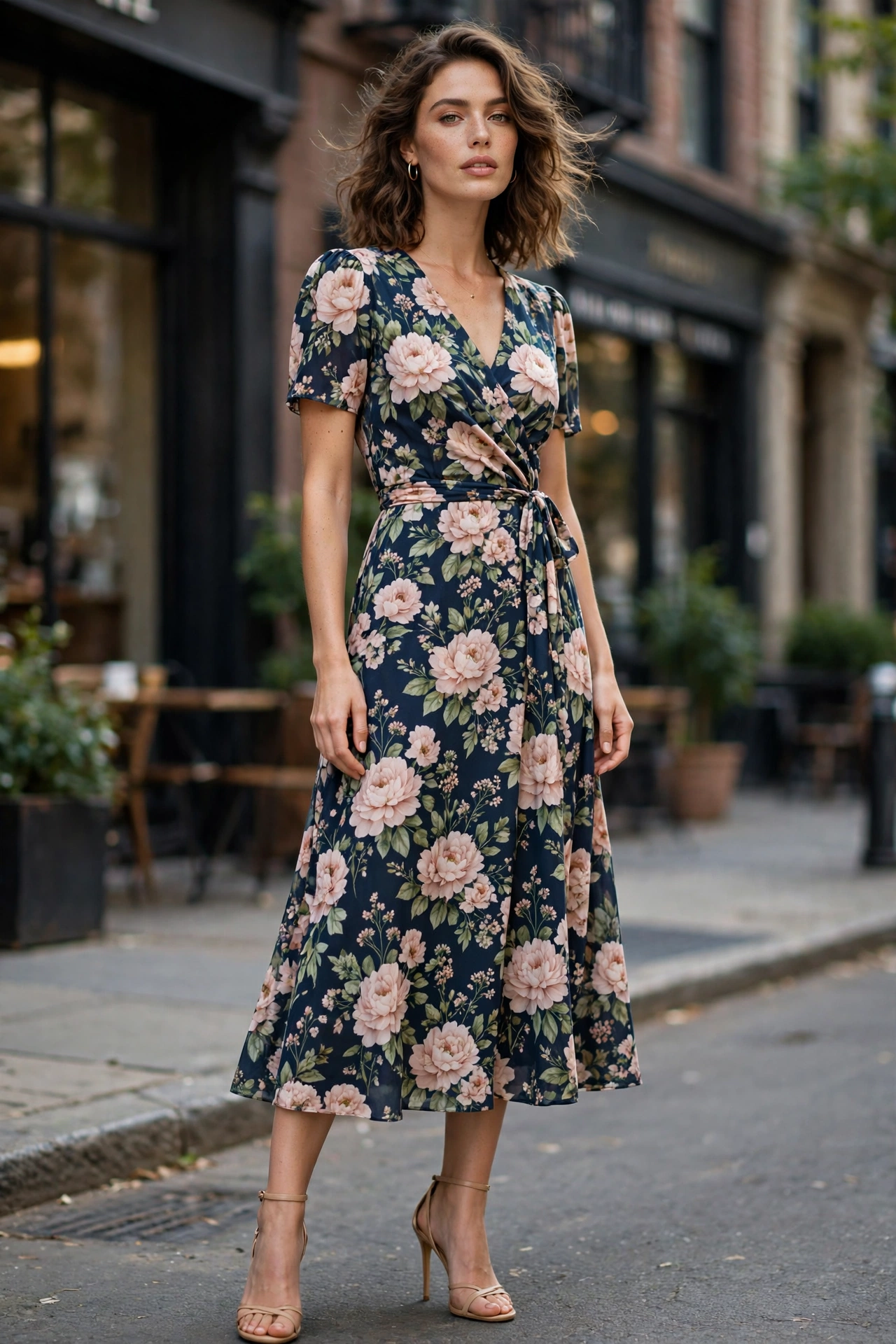
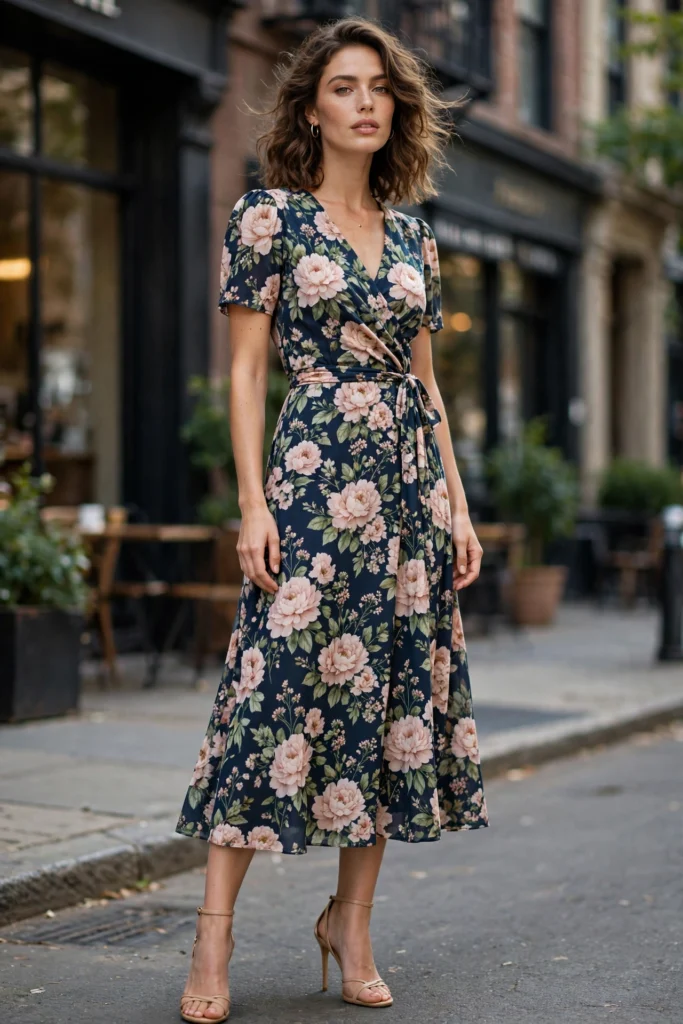
Midi dresses confuse people the most. The hem lands around the calf — the widest part of your lower leg — and the wrong shoe makes you look shorter and wider. The golden rule: show some ankle, or cover the calf completely. A heeled sandal with a thin strap leaves the gap that keeps proportions right, and low block heels, kitten heels, and slingbacks all nail it. Slingbacks are the most underrated midi partner out there; mine from Nordstrom have styled fifteen different dresses. Ankle boots work if the hem falls over the boot top. And clean, slim white sneakers with a floral midi genuinely work for casual days.
Maxi Dresses: Comfort Hides Under There
A maxi dress is a gift, because nobody sees most of your shoe, so comfort can finally win. Flat leather sandals, simple slides, and cushioned footbed sandals are all fair game. Where height matters is the hem: if the dress grazes the ground in flats, a wedge or low platform keeps it out of puddles and stops you tripping. For dressier maxis, a heeled sandal with sparkle or a metallic finish peeks out as you walk — a two-inch heel makes the same impression as a four-inch one.
2. Shoes by Dress Style and Occasion: From Bodycon to the Office
Length gets you halfway. The other half is fabric, mood, and where you’re going — that’s when the best shoes to wear with dresses depend on the occasion.
Bodycon Dresses: Sleek Dress, Sleek Shoe
A bodycon dress is already making a strong statement, so the shoe should support it, not compete. Pointed pumps and minimalist heeled sandals are the reliable choices. Stilettos still deliver for a night out in Las Vegas or a Miami dinner, but a two-and-a-half-inch pointed heel in black or nude looks just as sharp and you’ll enjoy your night more. For the full look, our guide on How to Style a Bodycon Dress covers fabrics, layers, and accessories.
Sundresses and Casual Day Dresses: Easy Shoes for Easy Dresses
Sundresses are the most forgiving dresses in your closet and pair with almost any warm-weather shoe. Flat sandals are the obvious answer. Espadrilles are my favorite — a wedge espadrille gives height at beachside dinners without sinking into sand or grass — and canvas sneakers work for boardwalk days and Fourth of July cookouts. Avoid anything too formal; a patent stiletto with a cotton sundress looks like two outfits collided. Casual day dresses need shoes that match a real day’s pace: loafers, ballet flats, clean sneakers, and ankle boots in fall.
Formal Gowns and Work Dresses: Polished, But Wearable
For black-tie weddings, galas, and holiday parties, heeled sandals and classic pumps are the standard, with metallic or satin finishes. Formal doesn’t have to mean painful, though — a block heel carries you through cocktail hour, dinner, and dancing. If your gown is heavily embellished, keep the shoe simple. Our roundup of Wedding Guest Dresses in the USA lines up with this advice. At the office, closed-toe pumps suit client meetings and courtrooms, low block heels are kinder by 4 p.m., and loafers or pointed flats work in most workplaces. Commute in sneakers and change at your desk.
3. Seasonal Pairings and Color Rules That Actually Work
Season and color are the final filter I run through before choosing the best shoes to wear with dresses.
Summer and Spring: Sandals, Wedges, and Breathing Room
Summer is the easiest season, shoe-wise. Strappy flat sandals, slides, espadrilles, and wedges cover nearly every dress between Memorial Day and Labor Day, and leave a touch of room for heat-swollen feet. Wedges earn a special mention outdoors: a stiletto sinks into lawn grass, but a wedge spreads your weight out — perfect for garden parties and winery visits in Napa. Light colors keep a look airy, a point editors at Vogue’s guide to summer shoe trends also make. Spring is the in-between season, when clean white or pastel sneakers shine with floral dresses, and loafers and ballet flats handle chilly San Francisco mornings.
Fall and Winter: Boots Change Everything
Fall is when dresses get interesting. Add suede ankle boots and a jacket to a summer midi and it’s a whole new outfit. Chelsea, heeled ankle, and Western boots all work — the Western boot with a floral dress is basically a uniform at Nashville weekends — and sock boots are brilliant under midis. Colors deepen to cognac, chocolate, burgundy, and black. In winter, women in Minneapolis and Boston don’t stop wearing dresses; they switch to knee-high and over-the-knee boots over fleece-lined tights. A block-heel knee-high boot is sharp, stable on icy sidewalks, and warm — but skip suede on slushy Chicago streets and pick a lug sole on real ice.
The Color Rules Worth Memorizing
Remember four colors: nude, black, metallic, and white. They cover most dresses you’ll ever own. Nude, matched close to your skin tone, elongates your legs and answers almost every printed dress. Black anchors dark and jewel-toned dresses and winter outfits, though it can look heavy with pale, delicate dresses. Metallics are secret neutrals for weddings and parties — stylists at Harper’s Bazaar shoe and accessory styling coverage have called them the hardest-working evening option for years. White sneakers freshen bright and floral dresses, as long as they’re clean. For bags, belts, and jewelry, see How to Accessorize a Dress.
4. Comfort and Practical Tips: Shoes You Can Actually Live In
All the pairing advice in the world doesn’t matter if you take your shoes off under the table by nine o’clock. The best shoes to wear with dresses are the ones you can actually live in.
Heel Heights, Decoded Honestly
Under two inches — kitten heels, low block heels, most loafers — is all-day territory for most women. Two to three inches is the event sweet spot: real lift, a dressed-up line, and three to five manageable hours with a block heel or a small platform — enough for a wedding, dinner, or presentation. Above three inches, be honest: stilettos over three-and-a-half inches are sitting-mostly shoes. Don’t wear them to a standing cocktail party or a city walking tour.
Walking Cities and Outdoor Weddings: The Ground Decides
Walking cities demand a different standard. New York sidewalks, Chicago winters, cobblestones in Boston and Savannah, hills in San Francisco — these punish delicate shoes. Rotate cushioned loafers, low block heels, and clean leather sneakers, and choose rubber or lug soles for wet pavement. Keep flats at your desk, commute in the walking shoe, and change at your destination. Outdoor weddings are just as treacherous: stilettos sink into lawns with every step. Block heels, wedges, and dressy flats walk on grass normally and still read formal in photos. If you love a stiletto, clear heel protectors cost a few dollars and genuinely work — and choose an ankle strap if you’ll be dancing.
Breaking In, Budget Picks, and Care
New shoes on event day is a classic mistake. Break shoes in gradually — an hour at home, a short errand, a half day — and use moleskin or blister balm on hot spots; both cost almost nothing at Target or CVS. If a pair still hurts after three or four honest wears, donate it and move on. You don’t need designer shoes: some of my most-worn pairs came from DSW, Nordstrom Rack, and Zappos sales. Build in this order — nude heel, black heel, metallic sandal, white sneaker, ankle boot — and that five-pair lineup covers nearly every dress. A local cobbler’s ten-to-twenty-dollar heel tip replacement can save a two-hundred-dollar pair.
Conclusion
The best shoe for a dress isn’t the trendiest one or the most expensive one. It’s the one that fits the length, respects the occasion, suits the season, and lets you actually enjoy where you are. That’s really the whole secret behind the best shoes to wear with dresses: nude heels, clean sneakers, ankle boots, a metallic sandal — a handful of smart basics will carry you through weddings, workdays, and everything in between.
So next time you’re in front of that mirror, run the quick checklist: length, occasion, weather, comfort. One pair will win on all four. Trust it, wear it, and go enjoy your day. Keep a small rotation ready by the door, and you’ll stop second-guessing yourself in front of the mirror every single morning.
Frequently Asked Questions (FAQs)
Q1: What shoes go with every dress?
A1: A nude pump or low block heel in a shade close to your skin tone is the closest thing to a universal dress shoe. It works with any color or print, lengthens your legs, and suits both daytime and evening dresses in almost every season.
Q2: Can I wear sneakers with a dress without looking sloppy?
A2: Yes, if the sneakers are clean, slim, and simple — white leather is the safest choice. Pair them with casual, midi, or floral dresses, and avoid chunky gym shoes, which usually look accidental rather than deliberately styled and put together.
Q3: What are the best shoes for an outdoor wedding on grass?
A3: Block heels, wedges, or dressy flats are best because they won’t sink into lawn. If you prefer a stiletto, add clear heel protectors to the tips so you can walk on grass without sinking, wobbling, or ruining your heels on the day.
Q4: Which shoe color works with a printed dress?
A4: Pick a nude shoe close to your skin tone, or pull one quiet color from the print and match a simple shoe to it. Avoid adding another pattern on your feet, since the printed dress is already the focus of the outfit.
Q5: How high should heels be for all-day wear with a dress?
A5: For all-day wear, stay under two inches and choose a block heel, kitten heel, or cushioned flat. Save heels above three inches for shorter events where you’ll be sitting for much of the time, like dinners, ceremonies, receptions, and holiday parties.
Q6: Can I wear boots with a dress in summer?
A6: Lightweight ankle boots can work with casual dresses on cooler summer days, especially in Western or festival styles. On hot days, though, sandals or sneakers will be far more comfortable, breathable, and practical for long walks outside in the heat.