
Introduction
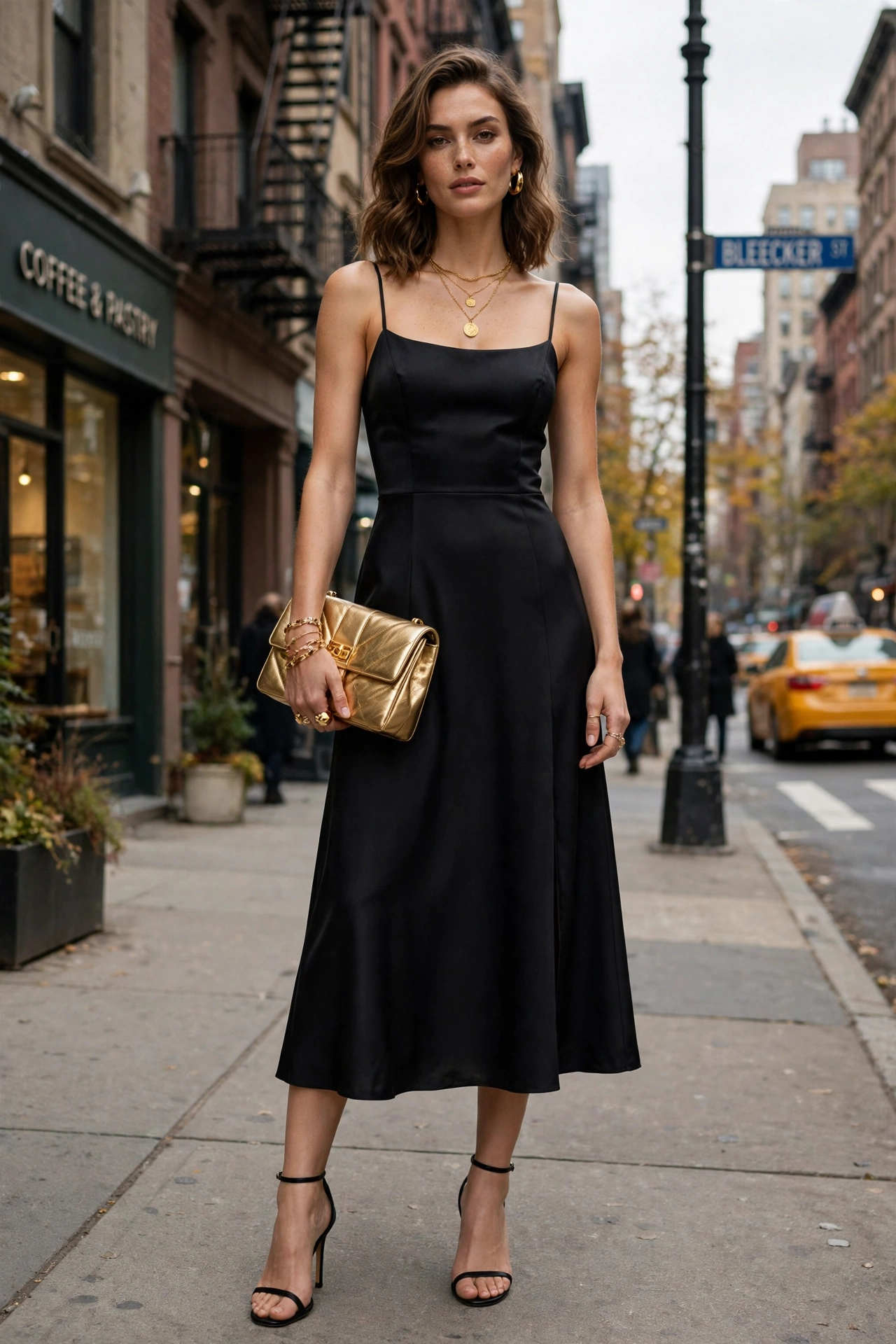
Learning how to accessorize a dress is the fastest way to get more wear out of clothes you already own. One black midi in your closet can look like office wear on Tuesday, date-night ready on Friday, and wedding-appropriate on Saturday. The dress doesn’t change. The accessories do all the work.
One summer in Nashville, I wore the same sundress to brunch and an evening rooftop event, and nobody noticed — I’d swapped sandals for heels, my tote for a clutch, and added gold hoops.
This guide breaks down how to accessorize a dress in front of your closet: jewelry by neckline, handbags by occasion, belts and layers, and formulas for work, weddings, and weekends. You don’t need expensive pieces, either — most of my favorites cost under $40 at Target or on Amazon.
1. Jewelry That Fits the Neckline: Where Every Dress Look Begins
One rule first: your necklace should follow the shape of your neckline, not fight it. Once that pairing is right, everything else about how to accessorize a dress gets easier.
V-Neck and Wrap Dresses
A V-neck is the easiest neckline to accessorize — the V is basically an arrow pointing to where your necklace should land. Choose a pendant or Y-shaped necklace that mirrors it: a small gold pendant an inch or two above the point looks intentional. Skip a round choker with a deep V; the shapes clash. Small studs keep the focus on the necklace; medium hoops feel more relaxed.
Strapless, Sweetheart, Halter, and High-Neck Dresses
Strapless dresses leave a lot of open space. A choker, collar necklace, or short chunky chain fills it beautifully — I love a single strand of pearls or a bold gold collar for weddings and formal dinners. Or skip the necklace and go big on earrings; long drops balance bare shoulders. Just don’t do statement necklace and statement earrings at full volume together. Pick one lead singer. Sweetheart necklines take a curved necklace instead. Halter and high-neck dresses are simpler still: skip the necklace entirely and put your effort into earrings, a bracelet, and an updo.
Layering Necklaces and Mixing Metals Without Stress
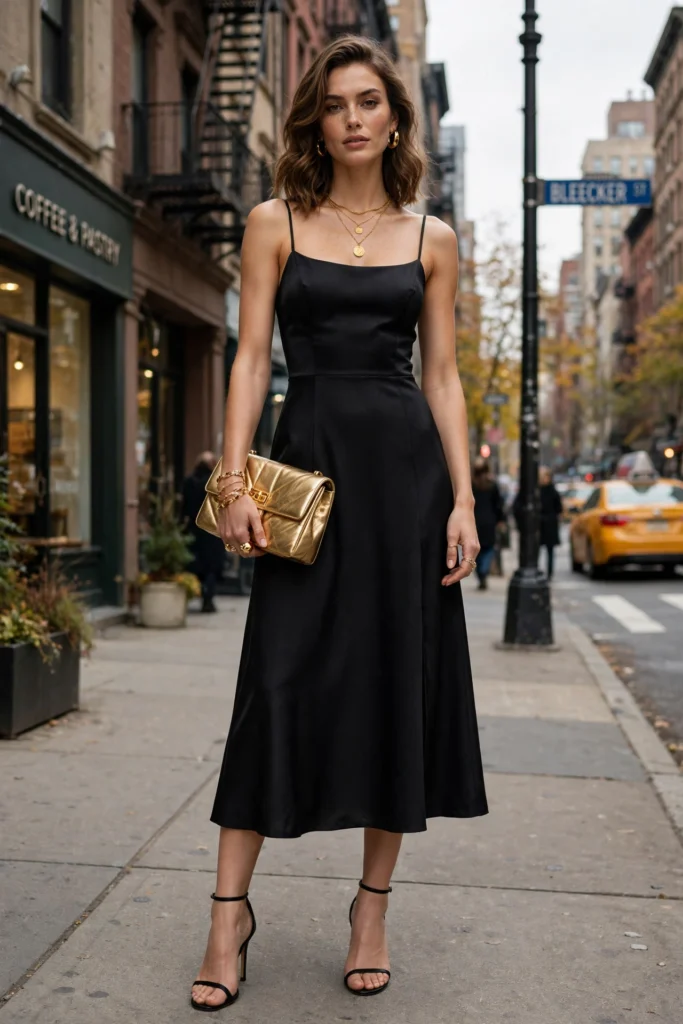
Layering is where many women either shine or get tangled, literally. The formula is three necklaces in three lengths: short at 14 to 16 inches, middle around 18, longer at 20 to 24 — each a different weight or texture. Start with one metal family, all gold or all silver. Mixing metals works too, as long as you repeat each metal at least twice. Skip pre-layered sets; build layers from pieces you already own. Fashion editors at Who What Wear accessory styling guides make the same point: balance matters more than matching sets.
2. Handbags by Occasion: Size, Shape, and Color That Actually Work
A bag can quietly upgrade a dress or quietly ruin it — usually it’s the size that’s wrong, not the color. Match the bag’s job to the dress’s job first; that’s the core of how to accessorize a dress with a bag.
Clutches for Evening and Crossbody Bags for Day Dresses
For weddings, galas, and dressy dinners, the clutch is still the answer: phone, card, lipstick. Choose a structured satin, metallic, or beaded one with a detachable chain strap. Our guide to Best Party Dresses for Women in the USA pairs well here. By day, the crossbody is the hardest-working bag for dresses — hands free for farmers markets, museum days, and travel. Keep it small-to-medium; a tan or woven style goes with almost everything. My tan crossbody matches about 80 percent of my dresses.
Totes for Work and Straw Bags for Summer
Work dresses need a bag that can carry a laptop. A structured tote or clean satchel is the professional choice. Choose black, navy, cognac, or deep burgundy, make sure the handles fit over a winter coat — the detail everyone regrets in January in Minneapolis — and pick a zip top if you commute by train. From May through September, straw and raffia bags partner naturally with sundresses and linen. Keep straw away from satin and sequins.
Bag and Dress Color Rules That Save Guesswork
You don’t have to match your bag to your shoes anymore and an exact match can look dated. Coordinate by tone family or formality instead. Own one true neutral bag: black for most women, cognac for warm wardrobes, cream for light ones. Metallic gold or silver is the secret evening neutral. With a printed dress, pull the bag color from the print; with a neutral dress, a colored bag is your easiest pop. A little black dress with a red bag and red lipstick is still undefeated, as the styling ideas in How to Dress for a Date Night in the USA show nicely. Style coverage from InStyle handbag and dress styling advice lands on the same advice: buy the perfect neutral bag first.
3. Belts, Scarves, Hats, and Layers: The Pieces That Change a Dress’s Mood
Jewelry and bags finish a dress. Belts and layers transform it — they take a dress you’ve worn ten times and make it feel new. If your dresses feel boring, don’t buy another dress. Learning how to accessorize a dress with these pieces is the smarter move.
Belts That Give a Dress a Waist and a New Shape
A belt does three jobs at once: it defines your waist, adds a finished detail, and can change a dress’s style category. A loose shift dress with a wide belt suddenly looks deliberate instead of like a very comfortable sack. Width is your first decision: wide belts, two to three inches, suit loose, flowing dresses; skinny belts suit fitted dresses; and a medium leather belt, about an inch wide, is the safest first purchase. Belt at your natural waist and match the buckle to your jewelry: gold buckle, gold earrings.
Scarves, Hats, and Sunglasses
The silk scarf is the most underrated accessory in American women’s wardrobes. Tied loosely at the neck, it adds color and polish to a plain dress. In your hair, it’s a headband or ponytail tie — a lifesaver in humid Houston and Miami. Tied to a bag handle, it adds print to a basic tote. Hats are regional: a wide-brim straw hat with a sundress is pure Southern and coastal summer, from Charleston to Santa Barbara. Sunglasses count too: cat-eye frames for fit-and-flare, oversized for maxis, aviators for shirt dresses.
Layers: Denim Jackets, Blazers, and Cardigans
Layers make dresses year-round clothing: a summer dress under the right jacket works in April and October too. The denim jacket is the American classic over floral, white, and even black dresses. A blazer does the opposite, taking a dress up a level: black over a sheath or slip dress is an instant office or dinner look, or a long blazer with boots in winter. Cardigans soften everything — cropped with fit-and-flare, a long duster over a column dress. Our footwear guide, Best Shoes to Wear with Dresses, shows how the same logic applies to shoes.
4. Complete Accessory Formulas: Copy These for Work, Weddings, Dates, and Trips
Advice is helpful. Formulas are better. When you’re running late, you don’t need theory — you need three pieces that work together. Here are the combinations I actually use when deciding how to accessorize a dress for occasions.
The Day-to-Night Swap and the Wedding Guest Formula
Master the day-to-night swap and you’ll save yourself real stress. Start with a dress that does both — a black midi, navy wrap dress, or dark floral. By day: flat sandals or loafers, a crossbody or tote, studs, a denim jacket. By night, change exactly four things: flats for heels, the big bag for a clutch, studs for statement earrings, and a bolder lip. For weddings, start with any color except white or ivory. Add metallic or nude shoes, a clutch, and one jewelry statement chosen by neckline. Add a wrap, because venues get cold from Napa vineyards to New England barns, and choose block heels or dressy flats outdoors — stilettos sink into grass and sand.
Date Night and Office Formulas
Date night is about looking like yourself — in a dress you can actually eat dinner in. My formula: a wrap or slip dress, heeled sandals or ankle boots, gold hoops, a layered necklace, and a clutch. A red or berry lip finishes it. The office formula is polish and restraint: a sheath, shirt, or knit dress with a structured tote, studs or small hoops, a watch, and a medium belt if the dress needs shape. It works in Washington, DC law offices and Portland studios. Keep jewelry quiet in meetings, and keep a blazer on your chair.
Vacation Formulas, Common Mistakes, and Budget Finds
Vacations test accessories, so pack a capsule: one crossbody, one clutch, hoops, one layered necklace set, one scarf, one belt. In New York, go dressier — a midi with ankle boots, a leather crossbody, and layered gold for Brooklyn brunch or Broadway. In Miami, go bright: a colorful sundress, straw bag, gold hoops, and a metallic clutch. The biggest mistake is wearing everything at once — statement earrings, layered necklaces, belt, scarf, hat. Pick two focus points maximum. Budget is no barrier: Target’s accessory wall covers hoops, necklaces, and belts, often under $15, and thrift stores hide leather belts and silk scarves under $10. Store pieces where you can see them.
Conclusion
A dress is the starting point, not the finished outfit. Once you understand how to accessorize a dress — neckline first for jewelry, occasion first for bags, layers for mood — getting dressed gets faster and more fun, and your closet feels bigger without buying more dresses.
Start small this week. Try the day-to-night swap, or belt a loose dress you’ve been ignoring. Add the one piece you’re missing — a tan crossbody, a pair of gold hoops — and build slowly. Good accessorizing isn’t about owning the most. It’s about owning the right few things, and knowing exactly what to do with them. Your closet already holds more combinations than you’ve tried — the fun is in finding them, one dress at a time.
Frequently Asked Questions (FAQs)
Q1: What are the must-have accessories for a dress?
A1: Start with five basics: hoop earrings, a medium neutral crossbody or tote, a metallic clutch for evening, a medium-width leather belt, and one silk scarf. These five pieces can accessorize almost any dress for work, weekends, weddings, and special events.
Q2: Should my bag match my shoes when I wear a dress?
A2: No, exact matching can look dated. Coordinate by tone and formality instead — a tan bag with brown sandals, or a metallic clutch with nude heels, looks modern without matching every shade perfectly on every single outfit you put together.
Q3: What jewelry goes best with a black dress?
A3: Almost any jewelry works. Gold hoops with a layered gold necklace look warm and classic, while silver and crystal feel sleek and modern. For evening, add one pop of color, like emerald earrings or a red clutch, and keep the rest simple.
Q4: How do I accessorize a dress for a wedding without looking overdressed?
A4: Match accessories to the dress code on the invitation. Choose one statement piece only, carry a small clutch, and wear block heels outdoors so you don’t sink into grass at the venue. Avoid white, ivory, and anything that competes with the bride.
Q5: What belt width works best with most dresses?
A5: A medium belt, about one inch wide, is the most versatile choice. It defines the waist on shirt, knit, and loose dresses without overwhelming the fabric. Save wider belts for loose dresses and skinny belts for fitted styles you already own.
Q6: How can I accessorize dresses on a tight budget?
A6: Shop Target and Amazon for hoops, belts, and basic clutches, and check thrift stores for leather belts, silk scarves, and vintage evening bags, often under $10. Build slowly with neutrals first, and you’ll get more outfits from dresses you already own.