
Introduction
There’s a moment every woman knows. An invitation lands — a holiday party, a friend’s evening wedding, a work event that says “cocktail attire” — and suddenly your closet feels empty. The right cocktail dresses for women fix that panic fast, because one good dress, in a cut that suits your body and a fabric that suits the season, handles almost every after-five invitation you’ll get all year.
I learned this the simple way. For years I bought a dress for one party and wore it once. Then I bought one well-fitted black sheath, had it tailored, and wore it to a Chicago office party, a rehearsal dinner, and a New Year’s Eve dinner in the same year. Nobody noticed. The accessories did all the talking.
1. Classic Cocktail Silhouettes and When Cocktail Attire Is Actually Required
Before trends, let’s talk foundations. Cocktail dresses settled into their modern form in the late 1940s: shorter than a gown, dressier than a day dress, and made to move, mingle, and hold a drink without a wardrobe battle. The same few silhouettes still do most of the work.
The Little Black Dress: The One That Never Lets You Down
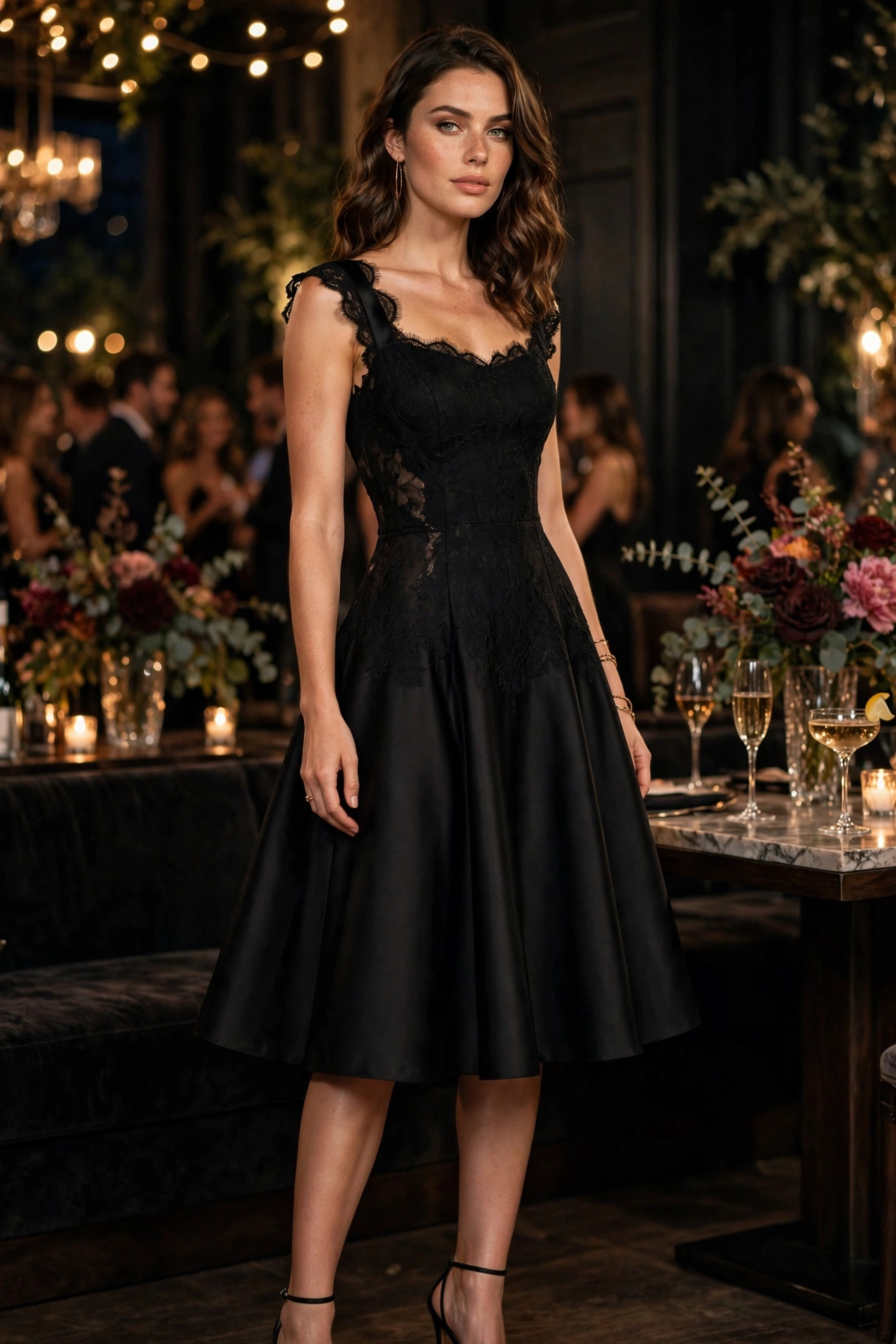
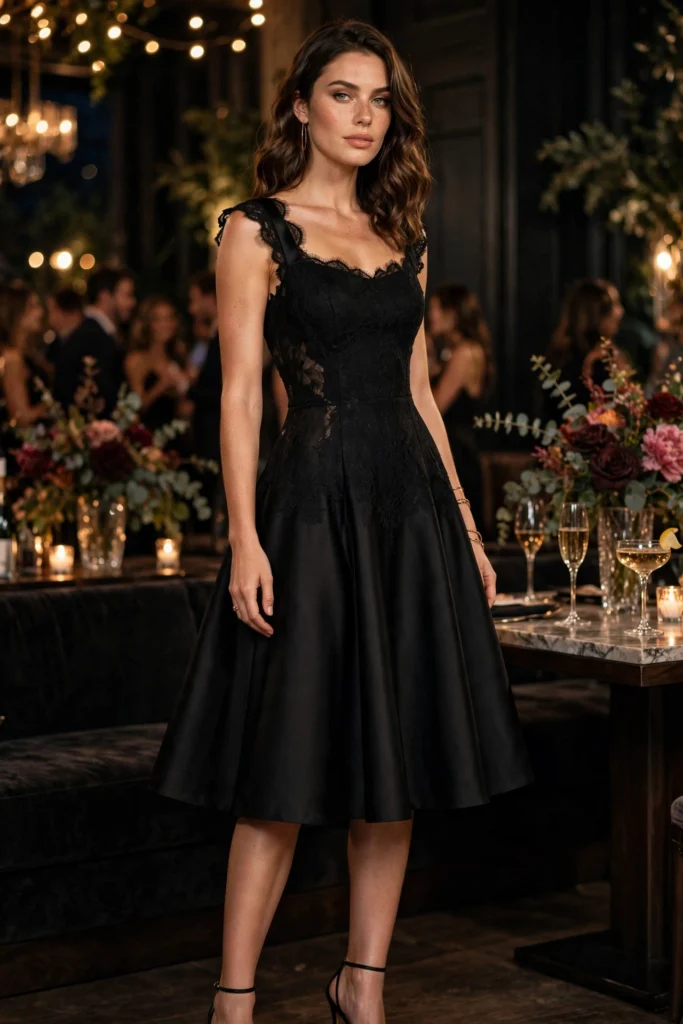
The little black dress, or LBD, is famous for a reason. Black photographs well, hides a spilled drop of red wine, and reads dressy even in a simple cut. If you’re buying your very first dress, buy the black one. Add sparkle earrings for a December party, or a red lip and strappy heels for date night. It’s still the most reliable of all cocktail dresses for women starting a wardrobe.
The Sheath: Clean, Close, and Quietly Confident
A sheath follows the body’s line without clinging like a second skin. It falls straight or slightly shaped from shoulder to hem, and hits around the knee. Think polished, not tight. Sheaths love structure, so look for crepe, ponte, or a lined scuba knit. A good sheath should skim. If you can see the outline of your bra clasp from the front, size up and tailor down. That’s a fit problem, not a body problem.
A-Line and Fit-and-Flare: The Crowd-Pleasers
An A-line dress is fitted at the top and gradually widens toward the hem. A fit-and-flare does the same with more drama: snug through the waist, then a skirt that swings. Both are forgiving, comfortable through a long dinner, and kind to almost everyone. You can eat the pasta, dance to the last song, and never once tug at your dress.
So What Does “Cocktail Attire” Really Mean?
“Cocktail attire” means semi-formal: dressier than work clothes, less formal than a gown. Your dress should land between the knee and mid-calf, in a fabric with some polish. A rooftop party in Miami in July calls for lighter fabric than a November gala in New York City, even if both invitations use the same words. Still unsure? Ask the host. For dressier celebrations, our guide to Best Party Dresses for Women in the USA goes deeper.
2. Best Cocktail Dress Styles by Body Type: Honest Fit Advice That Actually Helps
Body-type advice is a shortcut, not a rulebook. If you love a dress that “breaks” your category’s rule and feel great in it, wear the dress. Confidence reads louder than any guideline. Still, knowing your proportions helps you find cocktail dresses for women that work with your shape.
Hourglass, Pear, and Apple: The Core Shapes
Hourglass: If your bust and hips are close in size with a smaller waist, anything that acknowledges that waist works: wrap dresses, belted sheaths, fit-and-flare styles. V or scoop necklines keep the top balanced. Avoid boxy cuts.
Pear: Pear shapes carry more width through the hips than up top. Bring interest to the shoulders — an off-the-shoulder neckline, cap sleeves, a brighter bodice — then let the skirt glide over the hips. A-line and fit-and-flare dresses were basically invented for you.
Apple: If you carry weight around your midsection with slimmer legs, create a smooth line through the torso. Empire-waist dresses, structured A-lines, and looser wrap styles do this beautifully. Ruching smooths without compression, and a knee hem shows off your legs.
Straight, Petite, and Tall
A straight shape means bust, waist, and hips measure fairly close. Peplum dresses add flare at the hip; belted sheaths and wraps build a waist. Or own the line — a clean sheath with bold earrings looks chic.
Petite dressing is about proportion, not just length. Shop petite ranges — waist, armholes, and neckline are scaled for your frame. Shorter lengths keep legs looking longer, and a $25 hem can make a $60 dress look made for you.
Tall women face the opposite problem: waists sitting too high, hems landing higher than intended. Look for tall ranges, and don’t fear midi lengths — on you, they read exactly as elegant as designers intended.
Plus Size: Fit, Fabric, and Zero Apologies
Plus-size dressing has improved enormously. Buy your actual size, choose fabrics with structure and a little stretch, and insist on real fit — not a sack, not a squeeze. Look for shaped seams, a lined bodice, and straps wide enough for a proper bra. Wrap styles and fit-and-flare cuts are consistently flattering. Don’t limit yourself to black: jewel tones look incredible in Dallas or Atlanta. The tag number is not a grade for you.
3. Colors, Fabrics, and Seasonal Picks — Plus the Dressing Boundaries Nobody Explains
Silhouette gets you halfway there. Color and fabric decide whether the dress feels right. A velvet dress at a July garden party in Houston will have you melting before the appetizers. Match material to the moment.
Black vs. Jewel Tones vs. Everything Else
Black is the classic for good reason: forgiving, repeatable, appropriate almost everywhere. But very black fabric near the face can look harsh in photos under ballroom lighting. Try navy, charcoal, deep plum, or espresso instead — nearly-black shades with a softer edge.
Jewel tones are the sweet spot for most evening events. Emerald, sapphire, burgundy, and deep teal flatter a wide range of skin tones. They’re my default when choosing cocktail dresses for women for fall and winter parties. In spring and summer, try blush, sage, cornflower blue, and soft lavender. Bright red is confident and perfect for holiday parties. Save the full silver-sequin look for New Year’s Eve and Las Vegas nights.
Fabrics That Earn Their Place
Satin brings the glow, though it shows wrinkles and every seam underneath, so steam it and wear smooth undergarments. Velvet is winter’s best friend — plush and rich in burgundy, forest green, and navy, made for December parties in Minneapolis or Denver. Lace is the romantic pick for weddings. Crepe deserves more love: matte, structured, wrinkle-resistant, and perfect in a carry-on. Sequins are pure celebration — choose lined ones and check the armholes aren’t scratchy.
The Boundaries: Work Party vs. Wedding vs. Date Night
At a work party, keep hemlines and necklines a notch more conservative, and remember photos live on company channels. At a wedding, don’t wear white, ivory, cream, or anything that could photograph as bridal, unless the couple asks. For a fuller breakdown, see our guide to Wedding Guest Dresses in the USA Date night gives you the most freedom — the satin slip dress, the red number. Trend coverage at Elle frames it the same way: the best dress is the one that lets you enjoy the evening. Editors at Harper’s Bazaar make the same point about coats and entrances every holiday season.
4. Finishing the Look: Shoes, Bags, Jewelry, Tailoring, and Where to Shop in the USA
Even the best cocktail dresses for women need the right supporting cast — and this is where budgets are won and lost. The good news: you probably own more of the right pieces than you think.
Shoes That Survive the Whole Night
Heel height is a personal decision, not a dress code. A pointed pump in black, nude-to-you, or metallic goes with nearly every dress. Block heels are the smart compromise — real height, far less wobbling on grass or a Charleston dance floor. Test shoes in the store: if you’re already adjusting after a minute, they’re not your shoes.
Bags, Jewelry, and the Quiet Foundation
You need a small bag — a clutch that holds a phone, a card, lipstick, and keys. Metallic and black satin clutches are the workhorses. Jewelry: pick one focus — statement earrings with a bare neckline, or a delicate pendant with studs. Gold warms up black and emerald; silver loves navy.
Underneath, start with a properly fitted bra — Nordstrom offers free fittings. Seamless underwear in your skin tone disappears under almost everything. If you wear shapewear, choose light-to-medium smoothing; you have dinner to eat.
Tailoring: The Cheapest Luxury There Is
Off-the-rack dresses are cut for an imaginary average woman who doesn’t exist. A tailor closes the gap. Hemming, taking in a waist, or adding a hidden snap usually costs $20 to $60 in most US cities. A $90 dress with $30 of tailoring often looks better than a $200 dress worn as-is.
Where to Shop: Budget to Luxury
For friendly budgets, Lulus is a longtime favorite, with most dresses well under $100 and easy returns. Department stores are still best for trying several silhouettes in one trip: Macy’s offers a wide range on sale, and Nordstrom brings a step up in fabric and fit, plus free basic alterations on many full-price items.
Rent the Runway changed the math for one-night events: for roughly the price of a mid-range dress, you wear a designer piece, get a backup size, and send it back. Our Red Carpet Dresses guide shows how red-carpet ideas translate to real events. Order early: the best sizes vanish by late November. Rewearing cocktail dresses for women you love, restyled each time, beats one-night regrets.
Conclusion
The best cocktail dresses for women aren’t the most expensive ones. They’re cut for your actual body, in a color and fabric that suit the season, finished with shoes you can stand in. Start with a classic silhouette — wrap, A-line, sheath, or little black dress — and build outward.
Next time an invitation reads “cocktail attire,” I hope it feels less like a problem and more like an excuse. You know the silhouettes, your fit, and where to shop. Pick the dress, zip it up, and enjoy the party — in shoes that let you stay for the last dance.
Frequently Asked Questions (FAQs)
Q1: What length should a cocktail dress be?
A1: Most cocktail dresses fall between just above the knee and mid-calf. Knee-length and midi are the safest choices for almost any venue or invitation wording. Floor-length belongs to black-tie events rather than cocktail attire.
Q2: Can I wear a black cocktail dress to a wedding?
A2: Yes. In most of the US, black is now acceptable for evening wedding guests, especially at formal venues. Keep it festive with jewelry, a colorful bag, or brighter shoes so the look reads celebratory, not somber.
Q3: What shoes go best with a cocktail dress?
A3: Pointed pumps, strappy heeled sandals, and block heels are the classic partners. Metallic and nude-to-you shades work with almost any dress color. If heels aren’t for you, a polished pointed flat in patent or satin looks just as intentional.
Q4: How do I choose a cocktail dress for my body type?
A4: Start with balance. Define the waist if you have one, or create one with a wrap, belt, or peplum. Let skirts skim rather than cling where you carry weight, and always prioritize being able to sit, breathe, and move comfortably.
Q5: Is Rent the Runway worth it for a cocktail dress?
A5: For a one-time, high-photography event, often yes. You get a designer dress and a backup size for close to the cost of a mid-range dress, with no cleaning or storing afterward. If you’ll rewear a style, buying is better value.
Q6: How can I rewear the same cocktail dress without it looking the same?
A6: Change everything around it. Swap shoes and bag, add or remove a belt, layer a blazer, switch from earrings to a necklace, and change your hair and lip color. A simple black dress can look different three or four times this way.