
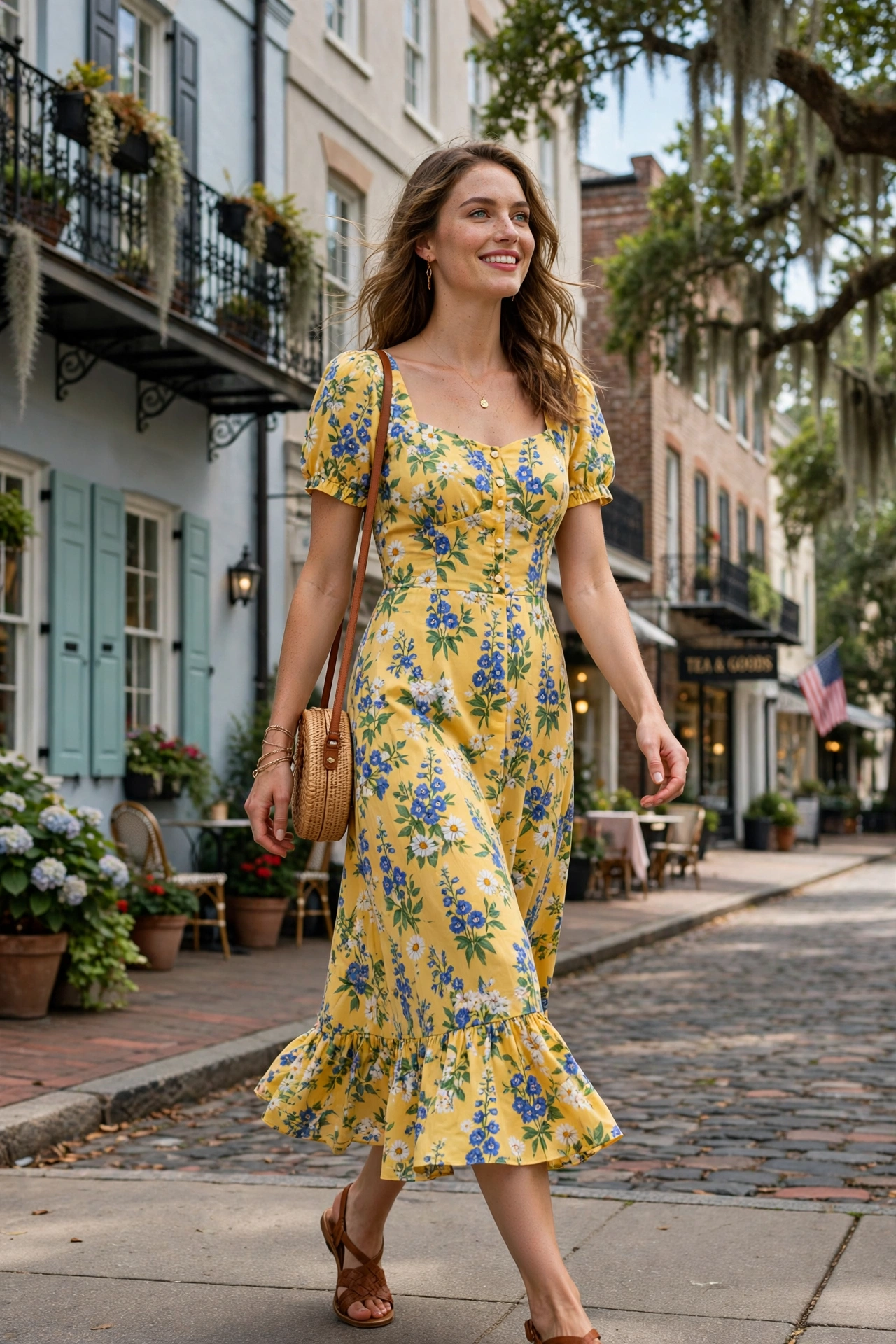
Introduction
The first truly hot weekend in June, I always make the same mistake. I pull out last summer’s dresses, try on three in a row, and realize two don’t fit the way I remember and one has a stain I swore I’d treated. Then I stand in front of the closet in my robe, coffee getting cold, already late for brunch. If that scene sounds familiar, this guide is for you. I’ve spent the last few summers paying much closer attention to which summer dresses for women actually earn their hanger space — the ones that survive a sweaty afternoon in Charleston, a windy evening in San Francisco, and a long, air-conditioned day that ends with dinner outside.
Here’s what I’ve landed on. A good summer dress isn’t just pretty in a photo. It has to breathe, move when you walk, sit comfortably through a two-hour patio lunch, and not require a special bra and a prayer to put on. It should also work more than once — farmers market on Saturday, baby shower the next weekend, just by changing shoes.
Below are 15 styles I keep coming back to, organized by how you’ll actually wear them: everyday staples, breezy weekend and vacation favorites, dressier picks for weddings and date nights, and a practical finish on fabrics, fit, and shoes. I shop everywhere from Target and J.Crew to Nordstrom and Revolve, because a $38 dress that fits beautifully beats a $180 dress that pulls across your hips every time.
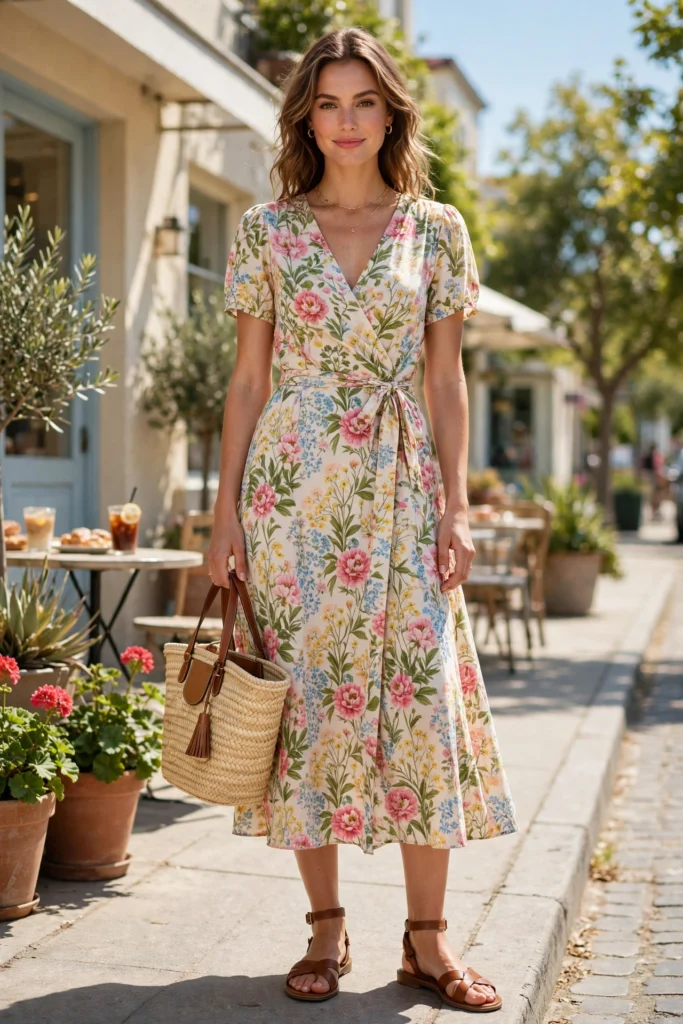
One quick note: summer in the USA isn’t one climate. Phoenix in August is not Portland in August. I’ll flag where a style works best so you can focus on what suits your weather.
1. Everyday Staples You’ll Reach for on Repeat
These are the work horses — the ones you grab on a Tuesday when it’s already 82 degrees at 8 a.m. and you need to look like a functioning adult by nine. I own versions of all four, and they get worn ten times more than anything fancier in my closet.
Style 1: The Shirt Dress
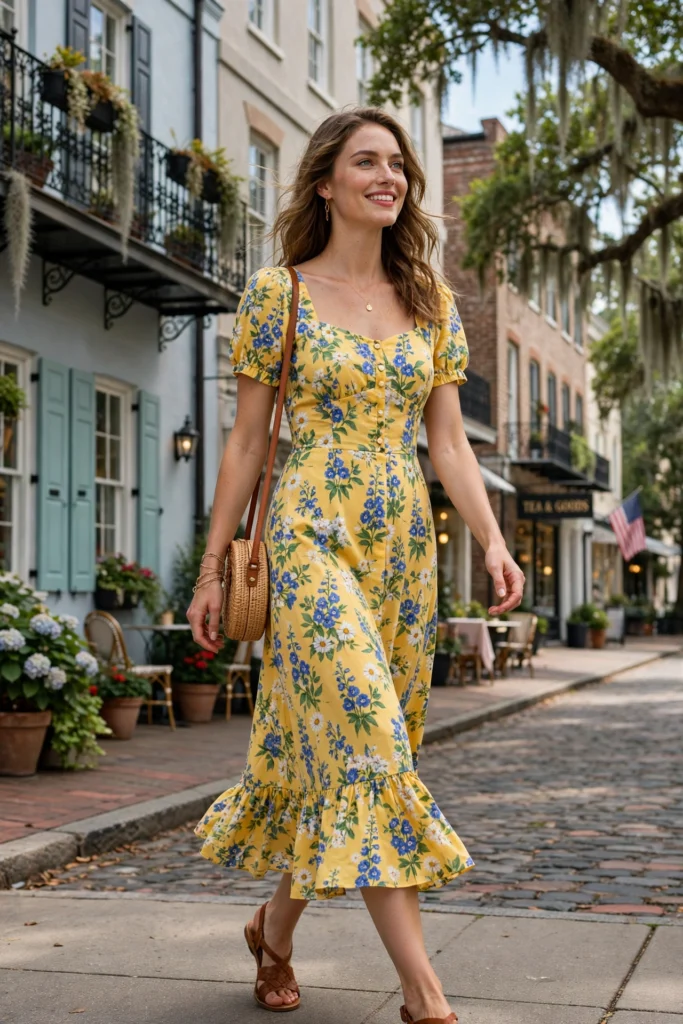
If I could keep only one summer dress, it would be a shirt dress. Buttons down the front, a collar that makes you look awake even when you’re not, and a shape you can belt or leave loose depending on the day — and, frankly, on lunch. A knee-length or midi shirt dress in cotton poplin or a linen blend works for casual offices, school meetings, and those days when you have errands, then dinner, then somehow a neighbor’s backyard party.
Light blue stripe is the classic, and it still looks sharp with white sneakers and a woven tote. White is beautiful but risky if you drink iced coffee in the car — learned that the hard way. For a more polished finish, try navy or olive with tan sandals and gold hoops. Nordstrom and J.Crew stock good mid-priced versions each spring, and common sizes sell out by July, so don’t wait for the heat wave. Fit tip: check the buttons sitting down. If they gap in the fitting room, they’ll gap everywhere. Size up and belt it.
Style 2: The T-Shirt Dress
A T-shirt dress sounds almost too simple to count as an outfit. That’s exactly the point. In soft cotton or a cotton-modal blend, it handles school drop-off, a Target run, a flight to Denver, and a casual cookout without missing a beat. The difference between a T-shirt dress that looks sloppy and one that looks intentional is almost always the details. A slightly structured shoulder, a hem that hits just above or just below the knee, and fabric thick enough that it doesn’t cling to every line underneath.
I wear mine with clean sneakers and a denim jacket for grocery stores and planes, where the AC is set to arctic. Add a cap and a crossbody and you’re done in four minutes. Stripes feel very Cape Cod; solid black feels more city. Skip the super-thin jersey versions you can see through in sunlight — fine as cover-ups, disappointing as dresses.
Style 3: The Smocked Midi Dress
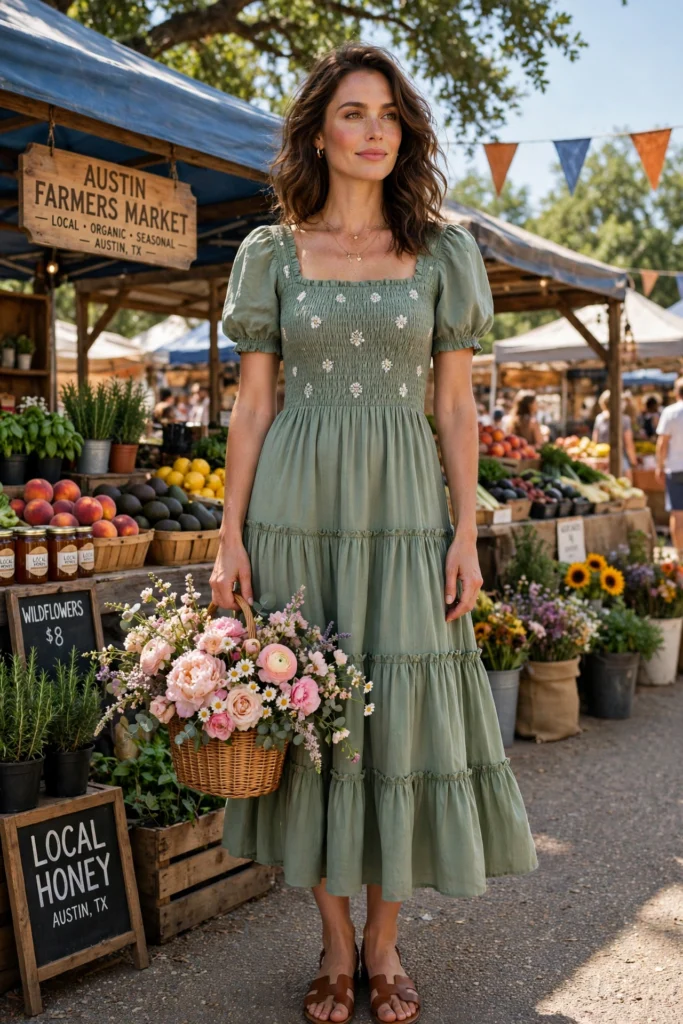
Smocking — that stretchy, shirred bodice — might be the most forgiving invention in women’s summer clothing. It stretches where you need stretch, holds its shape, and doesn’t require a perfect fit through the waist, which makes it a favorite for long lunches, travel days, and honestly, most of July in the Midwest. A smocked midi with puff sleeves or thin straps has a soft, romantic feel without being fussy.
It’s also one of the most size-inclusive styles out there — the bodice adapts, the skirt floats, and many brands offer it from XS through 3X in the same print. Florals are everywhere, but don’t overlook a solid in white, sage, or terracotta. People remember a bold print; a solid you can wear weekly with different sandals and nobody notices. Or cares.
Quick caution: if puff-sleeve elastic is tight in the fitting room, you’ll be tugging at it all day. Comfortable at minute one usually means comfortable at hour six.
Style 4: The Wrap Dress (And the Faux Wrap)
Diane von Furstenberg built an empire on the wrap dress for a reason: the V-neck, defined waist, and fluid skirt flatter a huge range of bodies. Summer versions in lightweight jersey or crepe suit offices, conferences, and dinners where you want to look polished but still eat pasta in peace. A true wrap gives you adjustability; a faux wrap — sewn shut, same crossover look — gives you security on windy days. If you commute in Chicago, you know why that matters. One gust off the lake and a true wrap becomes a situation. Look for breathable fabric: heavy polyester jersey feels sticky by noon in Atlanta or Houston. Colors that earn their keep: navy floral, emerald, and black with a delicate pattern. I get more compliments on a $60 sale-rack faux-wrap than on dresses costing three times as much. Fit does the heavy lifting.
A note on length: midi dominates because it works almost everywhere — no hemlines to worry about at work, no adjusting when you bend down for a toddler or a tote. Knee-length is a close second for offices. If you want one length that covers the most ground, start with a midi. For more on what’s shaping American closets this year, see our roundup of the Top 20 Latest Women’s Fashion Trends in the USA 2026, which covers several of these same silhouettes in a seasonal context.
2. Breezy Weekend and Vacation Dresses That Feel Like a Break
Weekend dresses have a different job. You want air flow, room to move, a print that hides a splash of lemonade, and a shape that photographs well without trying. These four are the ones I pack first — for brunch in Nashville and for walking around Savannah when the humidity is doing its absolute worst.
Style 5: The Floral Midi Dress
Yes, florals for summer are predictable. They’re also popular because they work. A floral midi in a ditsy print — small, scattered flowers — reads sweet and casual. A larger, bolder floral reads dressier and a bit more confident. The background color changes everything. White or cream backgrounds feel daytime-fresh. Black or navy backgrounds stretch into evening with just a shoe change.
What separates a great floral midi from a forgettable one is movement. Look for a skirt with some sweep and a bodice that doesn’t need constant adjusting. Chasing kids at a Fourth of July picnic? Wider straps or a smocked back will serve you better than spaghetti straps.
I tend to buy one new floral midi each spring and wear it relentlessly: church, showers, patio dinners, vacation photos in Palm Springs. Cost per wear drops to almost nothing by Labor Day. That’s the math I actually care about.
Style 6: The Classic Sundress
A sundress is the simplest definition of summer dressing — light fabric, easy straps, a fitted or smocked top, and a skirt made to catch a breeze. Cotton voile, rayon, and linen blends are your friends here.
The best sundresses for summer (and we have a full guide to just this category in our Best Sundresses for Summer: Styles American Women Love balance structure on top with freedom on the bottom, so you get shape without squeeze.
White eyelet sundresses deserve a special mention. They look crisp in photos from Nantucket to Newport Beach, they go with every sandal you own, and they don’t show sweat the way pale gray or light blue can. Just wear nude undergarments — white fabric in bright sun is less forgiving than it looks indoors.
Shopping notes: Target’s summer dress aisle in May is hard to beat under $40. Abercrombie has quietly become excellent at sundresses, with adjustable straps and petite and tall sizing. For an investment piece, Reformation’s linen sundresses hold up season after season — though you do pay for it.
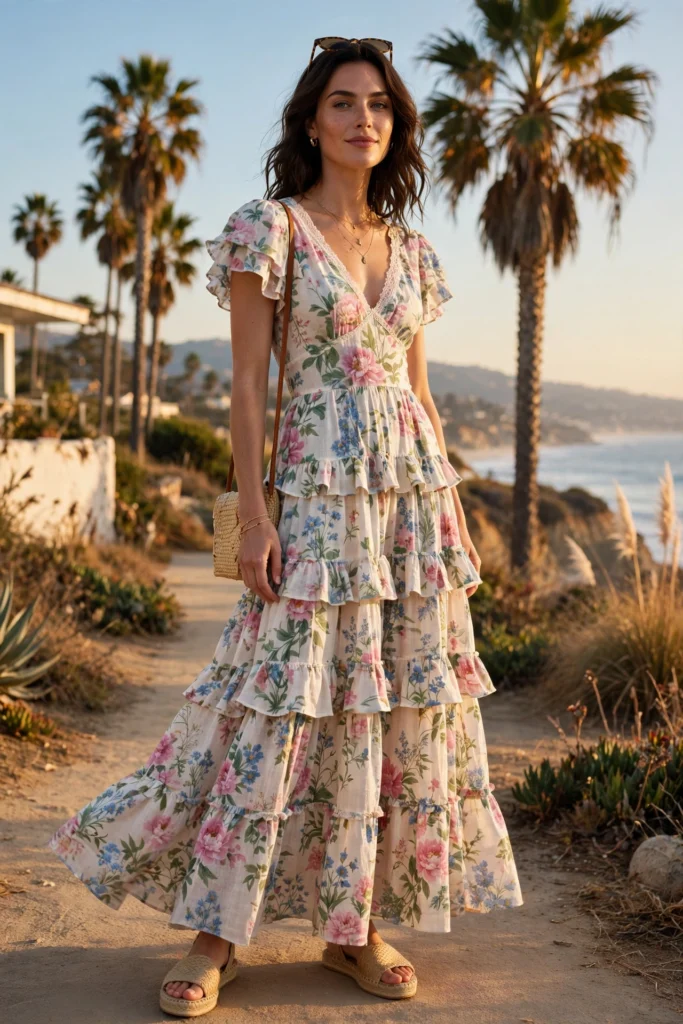
Style 7: The Tiered Maxi Dress
A tiered maxi is basically permission to be comfortable and dramatic at the same time. The tiers add volume and movement, the length adds presence, and the whole thing feels like you tried much harder than you did. It’s my go-to for outdoor concerts, winery afternoons in Virginia or Paso Robles, and beach-town dinners where the restaurant is casual but you want to feel a little special.
Two warnings. Tiers add fabric, and fabric adds heat — in New Orleans in August, pick thin cotton or rayon, not lined polyester. And watch the length: a maxi that pools on the ground is a tripping hazard with a filthy hem by dinner. It should graze the top of your sandals. Petite shoppers, look for short lengths; tall shoppers, check measurements, because a maxi hitting mid-shin reads as a sizing error. Pair it simply — flat sandals, a straw bag, one piece of jewelry. The dress is already doing a lot.
Style 8: The Slip Dress
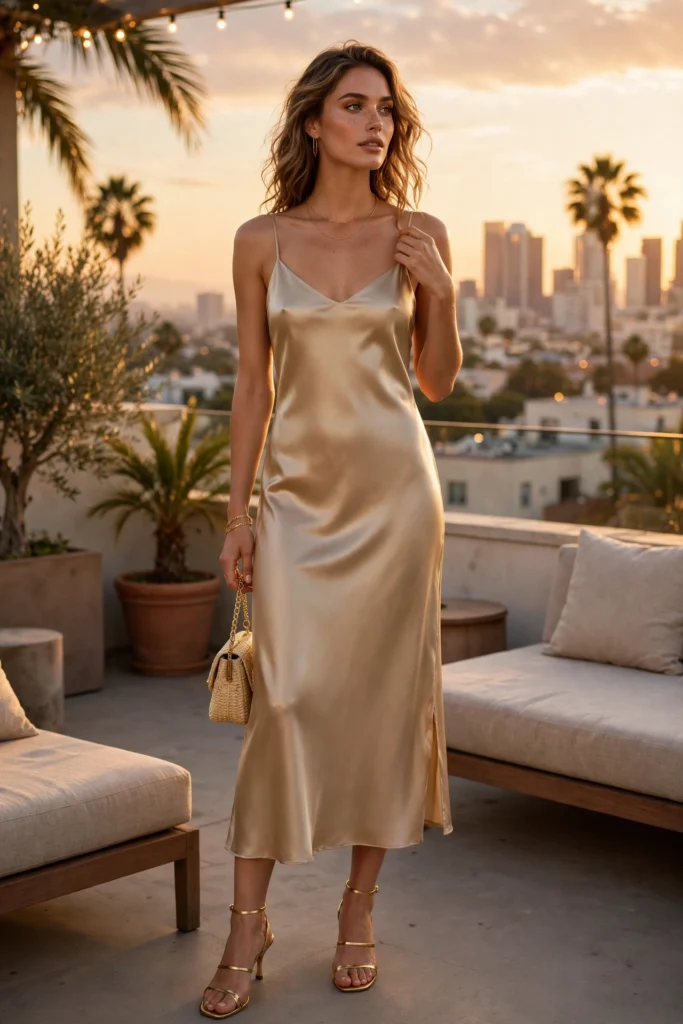
A slip dress in summer is a lesson in less being more. Cut on the bias if you can find it, falling in a clean line, with delicate straps and a midi hem — it works for a gallery opening in Los Angeles, a rooftop dinner in Brooklyn, or layered under a blazer for a creative office. Satin and silk-look fabrics catch the evening light beautifully. Matte versions in cotton or linen blends feel more daytime.
The honest part: slip dresses show everything underneath, so smooth undergarments aren’t optional, and check the fabric in natural light — some satins go sheer under flash photos. I also keep a cropped cardigan nearby for restaurants that blast the AC. Shoulders get cold. Every time.
For daytime, layer a plain white tee under a slip dress and add sneakers. It’s a look borrowed from the ’90s that still works because it’s practical — sun protection for your shoulders, more coverage, less fuss. Style coverage from Vogue’s summer dress and warm-weather styling coverage returns to the slip dress nearly every season for exactly that reason: three or four styling options from one simple piece is hard to argue with./
3. Dressier Styles for Weddings, Parties, and Nights Out
Summer is peak event season: weddings in June, engagement parties in July, milestone birthdays, date nights that justify doing something with your hair. Dress codes get confusing, heat makes everything harder, and nobody wants to spend $250 on a dress that lives in the closet with the tag on. These next four styles pull double and triple duty.
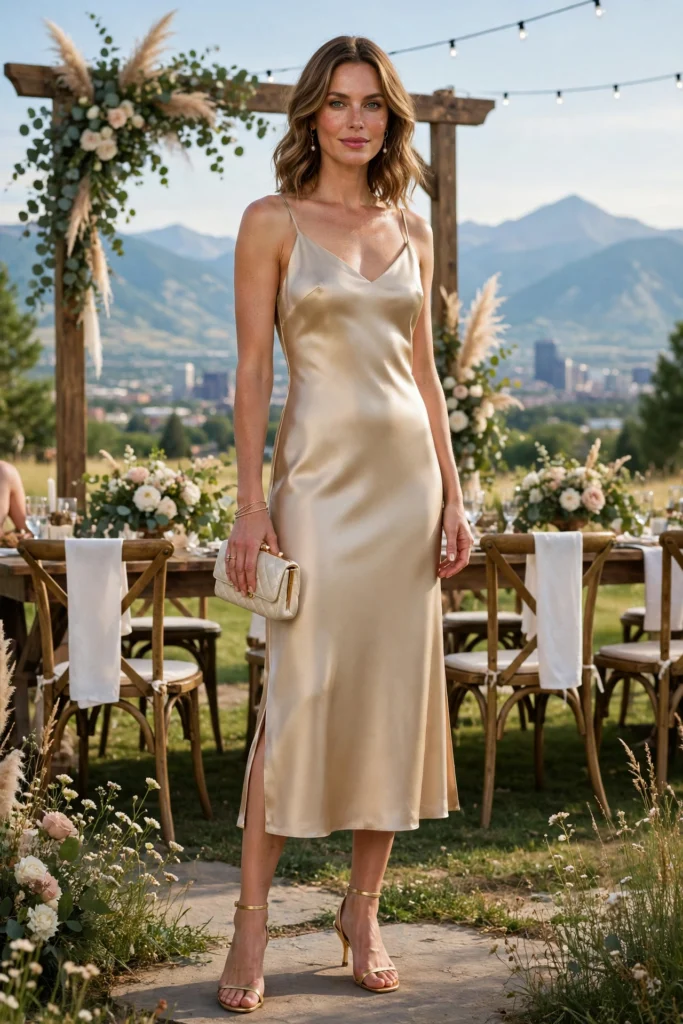
Style 9: The Satin Midi Dress
If there’s a single MVP for summer events, it’s the satin midi — often with a cowl neckline, a subtle slit, and straps you can actually wear a strapless bra with. It reads elegant without reading bridal, which is a fine line at weddings. Jewel tones photograph the best: emerald, cobalt, deep plum. Champagne and gold are gorgeous for evening but risky for weddings, since they can photograph almost white. Don’t be the guest who causes that conversation.
A satin midi travels well, too — roll it in tissue, hang it in a steamy bathroom, and most wrinkles fall out. I’ve worn the same emerald one to a wedding in Denver, a fundraiser in Chicago, and a date night in Scottsdale, just by rotating shoes and earrings. Nobody connected the dots. The dress is a backdrop; the styling changes the story.
Price-wise, you don’t need to splurge. Quince and department store brands offer solid satin midis at fair prices. Spend the extra on tailoring the length — a hem at the right point on your calf makes a $70 dress look custom.
Style 10: The Cutout Dress — Tasteful Version
Cutouts had a loud moment a few summers ago, and the grown-up version has stuck around: a small waist cutout, an open back, a keyhole at the neckline. One opening. Not three. For women over 25 — which is most of us shopping for event dresses — a single, well-placed cutout feels modern and confident without feeling like you’re borrowing from a 19-year-old’s closet.
Fabric matters enormously here. A cutout in structured crepe or ribbed knit holds its edges. One in flimsy jersey stretches and reveals more than you planned by dessert. Think about your bra situation before falling for an open back, too — adhesive options fail spectacularly for some women, usually at the worst moment. Test at home. Dance around your kitchen. I’m serious.
This style shines for date nights, birthday dinners, and Miami or Las Vegas evenings, where the dress code runs bolder than in, say, Boston or Minneapolis. If you’re heading to South Florida, our piece onMiami Beach Fashion: What Women Wear in Miami goes deeper on that city’s specific mix of heat, color, and nightlife dressing.
Style 11: The One-Shoulder Dress
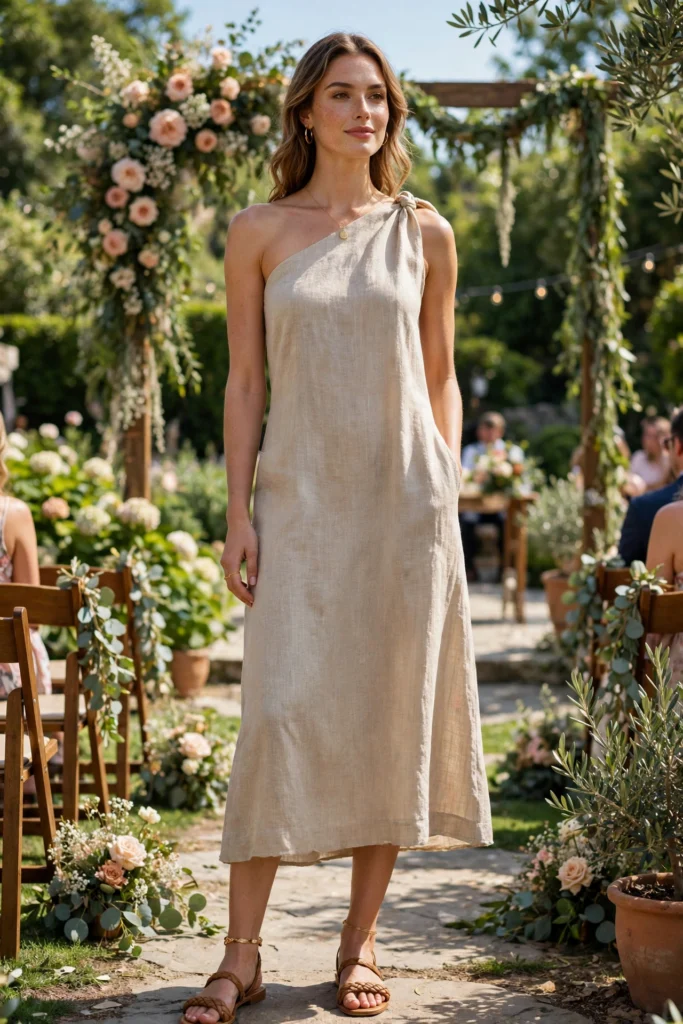
One-shoulder dresses have a built-in sense of occasion. The asymmetric neckline shows off shoulders and collarbones, looks great in photos, and — this is the practical secret — stays put better than a strapless dress. No tugging it up all night. No quiet panic during the first dance.
For summer weddings, a one-shoulder midi in dusty blue, sage, or a soft floral suits most dress codes short of black tie. For black tie, go floor-length in a richer fabric, keep jewelry minimal, and sweep your hair to one side to finish the line of the dress. Small thing. In photos, it’s not.
One fit note: a diagonal neckline pulls if the bodice is too tight, creasing across the chest in a way no adjusting fixes. Between sizes? Take the larger one and have the waist taken in. It’s inexpensive, and the difference shows.
Style 12: The Linen Dress
Linen is summer’s honest fabric. It wrinkles. It admits that upfront. And in exchange, it breathes better than almost anything else you can wear when it’s 95 degrees in Savannah or Charleston and the wedding ceremony is outdoors because the couple loves a garden setting. A linen midi or maxi — in a structured A-line, a shirt dress cut, or a simple sheath — looks relaxed and expensive at the same time, provided you embrace the texture instead of fighting it.
A few tricks help. Linen blends wrinkle less than 100% linen and drape more softly. Medium and darker colors hide creases better than white. A quick steam and hanging the dress, rather than folding it, keeps it presentable. Editors atHarper’s Bazaar summer fashion coverage frequently single out linen as the fabric American women return to for hot-weather events, and after a July wedding in a synthetic dress a few years ago, I understand why. I have not made that mistake twice.
For a guest dress code that says garden party, beach formal, or dressy casual, linen is often the smartest answer in the room. Pair it with block-heeled sandals — stilettos sink into lawns, a lesson every outdoor wedding teaches at least one guest — plus a woven clutch and simple gold jewelry.
A word about wedding colors: don’t wear white, ivory, or anything that could read as white in photos, and skip the bridal party’s color if you know it. Confused by the dress code? Text a member of the wedding party, not the couple, and ask. And bring a light wrap — sunset ceremonies are followed by a breeze more often than not.
4. Finishing the List — And Actually Choosing Well
The last three styles are more specific — not for every closet, but for the right summer plans they’re the most fun buys here. After them comes the unglamorous stuff that decides whether any dress actually works: fabric labels, fit checks, shoes, and cost per wear.
Style 13: The Eyelet Dress
Eyelet — cotton with embroidered cutwork — is as American summer as it gets. It shows up at church picnics in Ohio, at clambakes in Maine, at bridal showers everywhere. A white or pastel eyelet dress reads fresh and classic without a single accessory doing heavy lifting. Because the fabric has texture built in, you can keep everything else plain: tan sandals, a simple tote, hair down.
Quality varies a lot. Better eyelet is fully lined through the body — the cutwork means tiny holes, after all. Cheaper versions go sheer in the skirt under strong sun, so hold the dress up to the light in the store. Ten seconds saves a return trip. Eyelet washes well and lasts for years if you hang it dry; my navy one is on its fifth summer. Navy is the underrated pick, by the way — sharper than white, and it hides an ice cream drip far better.
Style 14: The Denim Dress
Denim dresses cycle in and out, and they’re firmly in right now. A fitted denim midi with a front zip or buttons has a cool, confident, slightly Western energy that plays well from Nashville to Austin to a casual Friday in Kansas City. A softer chambray shirt dress, meanwhile, is really just the shirt dress’s laid-back cousin — lighter, more weekend than work.
Styling is where denim dresses go right or wrong. Brown leather warms denim up — a woven belt, tan sandals, a suede bag. Avoid head-to-toe denim in one wash; break it up with a white jacket or a different wash. And check for a little stretch: rigid denim is unforgiving through the ribs when you sit, while 1–2% elastane stays livable all day. Your ribcage will have opinions by 3 p.m. otherwise.
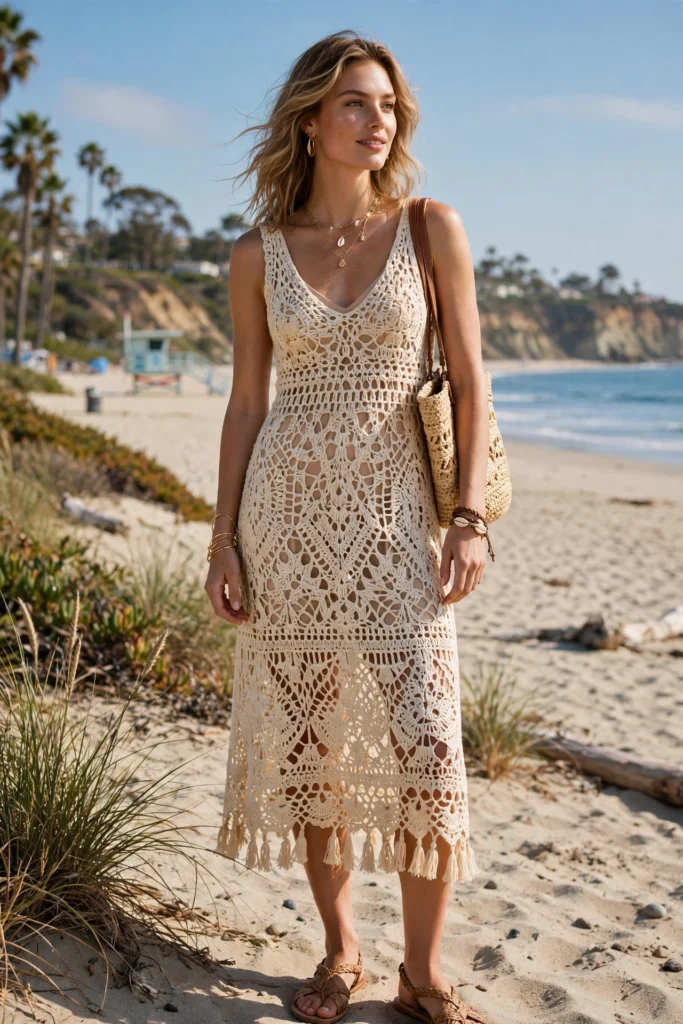
Style 15: The Crochet or Open-Knit Beach Dress
Last on the list, the dress that lives by the water. Crochet and open-knit dresses work as cover-ups in Miami, as true dresses (over a slip) for beach-town dinners in San Diego or the Outer Banks, and as the piece in your suitcase you’ll reach for on a boat day when everything else feels too precious to risk near sunscreen and salt water.
Be realistic about where it belongs. Open-knit over a swimsuit is a beach look, not a city-restaurant look, no matter what a product photo suggests. Over a fitted neutral slip, it works for dinner in resort towns. Know your venue. Crochet also snags on jewelry and tote straps, so pack it flat and away from Velcro. Ask me how I know.
Now, the Choosing Part: Fabrics That Survive an American Summer
Cotton and linen breathe. Rayon drapes beautifully and breathes reasonably well, though it can wrinkle and shrink, so follow the wash label. Tencel is excellent — soft, breathable, more wrinkle-resistant. Plain polyester is the one I’d steer you away from for daytime heat: it holds odor, traps warmth, and feels clammy in humidity. A polyester blend for an evening satin dress is fine. For a July afternoon in St. Louis? You’ll regret it by the second hour.
Check for lining in light colors, pockets where you want them, and adjustable straps. Then do my three-move fitting-room test: sit down, raise your arms like you’re reaching a high shelf, and walk the length of the store. Fails any of those, it fails real life too.
Shoes and Bags: The Two Decisions That Finish the Dress
Most summer dresses pair with a short list of shoes: flat leather sandals for daytime and maxis, white sneakers for shirt dresses and T-shirt dresses, block heels for weddings and grass, espadrille wedges for vacation dinners, strappy heels only on pavement at night. The core idea is simple — match the shoe to the setting, not just the dress. Bags follow the same logic: a woven tote for day, a crossbody for markets and festivals, a clutch for evening. Choose one that doesn’t fight the dress. That’s the whole system.
A Quick Word on Budget and Cost Per Wear
I believe in cost per wear, not price tags. A $140 dress worn 20 times costs $7 per outing. A $35 dress worn twice because it pills and fits oddly costs $17.50 — plus frustration. Buy the workhorses (shirt dress, wrap, smocked midi) at the best quality you can afford, buy trendier pieces (cutout, crochet) inexpensively and without guilt, and shop late-August sales, when prices drop 40–60% at Nordstrom, J.Crew, and most department stores. Tailor the keepers, too — fifteen dollars of tailoring on a four-summer dress is the best money in this article.
Conclusion
Fifteen styles sounds like a lot until you realize you don’t need all fifteen. Most women I know build a happy rotation out of five or six: a shirt dress and a wrap for work-ish days, a smocked midi and a sundress for weekends, a satin midi for events, and one fun pick that matches how their summers actually look. Start there. Don’t let a sale talk you into a dress for a version of summer you don’t have. The best dress is the one you stop thinking about five minutes after you put it on — it fits, it breathes, it lets you eat lunch, sit on grass, and dance at the reception. Here’s to finding yours before the first heat wave.
Frequently Asked Questions (FAQs)
Q1: What is the most versatile summer dress style for women in the USA?
A1: A midi shirt dress or a wrap dress is the most versatile. Both work for casual offices, lunches, and events, and both can be dressed up with heels or down with sneakers and a tote. A smocked midi is a close third because the stretchy bodice fits many body types comfortably.
Q2: Which fabrics are best for summer dresses in hot and humid states?
A2: Cotton, linen, and linen blends breathe best in humidity, which makes them ideal for states like Florida, Texas, and Louisiana. Tencel and rayon are good second choices. Try to limit plain polyester for daytime wear, as it tends to trap heat and odor.
Q3: How many summer dresses does a woman actually need?
A3: For most women, five to seven well-chosen dresses cover a full summer: two everyday styles, two weekend styles, one or two event dresses, and one vacation or statement piece. Quality, fit, and variety of use matter far more than owning a large number.
Q4: What shoes should I wear with summer dresses?
A4: Flat leather sandals suit maxis and daytime looks, white sneakers pair well with shirt dresses and T-shirt dresses, block heels are safest for weddings and grass, and wedges add height for vacation dinners. Match the shoe to the setting and surface, not only to the dress.
Q5: Are summer dresses appropriate for the office?
A5: Yes, in most workplaces with business-casual or casual dress codes. Choose knee-length or midi styles with more coverage, such as shirt dresses, wrap dresses, and structured A-line dresses, and add a blazer or cardigan if your office is conservative or heavily air-conditioned.
Q6: When is the best time to buy summer dresses on sale in the USA?
A6: Late August and early September bring the deepest discounts, often 40–60% off, as stores clear space for fall. Memorial Day and Fourth of July sales are also good for current-season styles. Buying a classic style on sale in August is a smart way to stock up for the following summer.