
Introduction
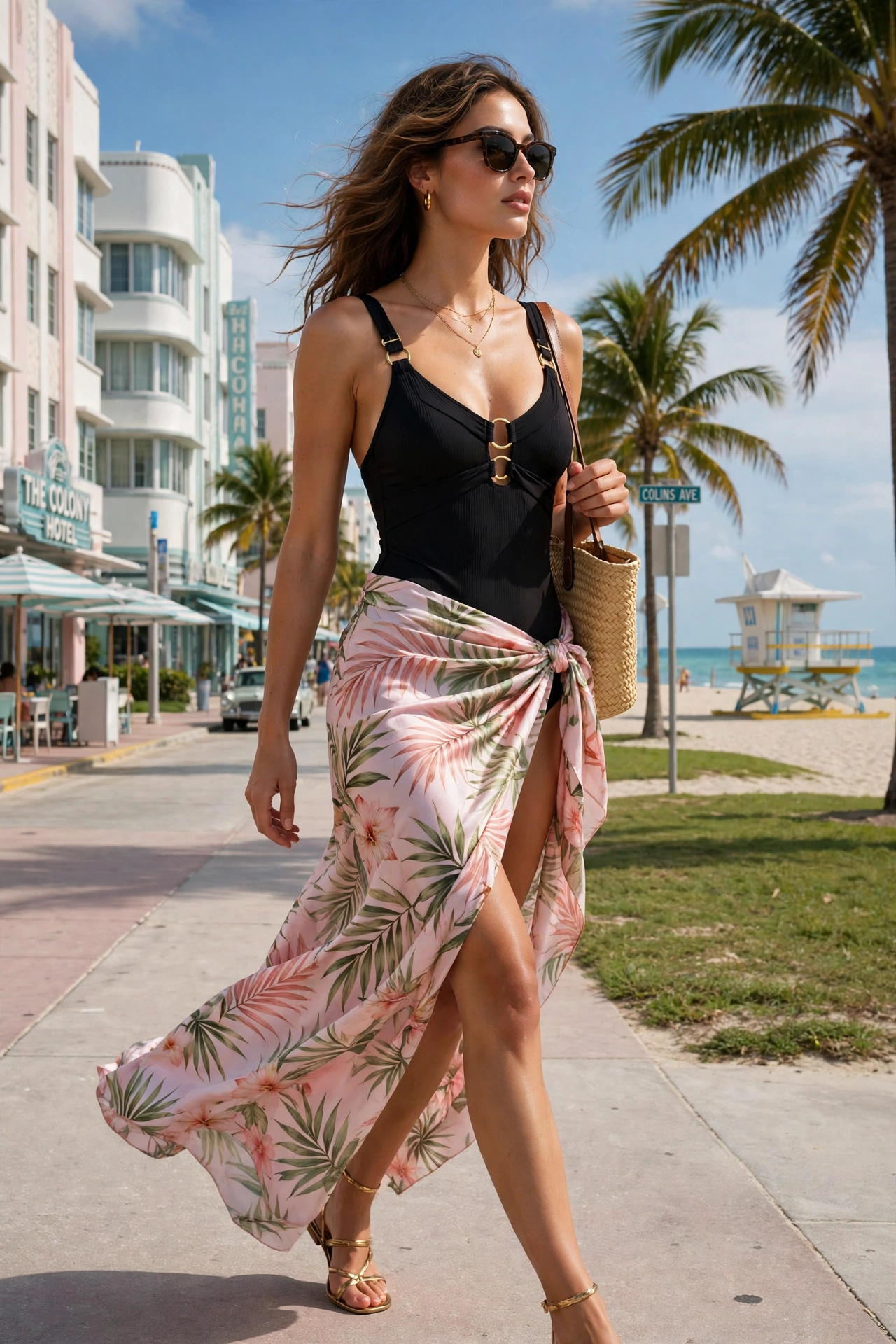
Miami beach fashion women build starts with one fact: this city lives on the sand. Miami has roughly 15 miles of beach, sunshine more than 270 days a year, and ocean water warm enough to swim in almost every month. When the beach is that central, swimwear stops being vacation clothing. It becomes the foundation of the whole wardrobe — and South Beach women dress like it.
The first time I visited, I packed one swimsuit, like a person going to a hotel pool for an afternoon. By day two I understood my error. Women around me rotated suits the way other cities rotate shoes: a sporty one-piece for morning laps, a styled bikini and sarong for the beach club, a third look for the sunset walk down Ocean Drive.
This guide covers the swimwear women actually wear here, how bikinis get styled with cover-ups and sarongs, the beach dresses that carry the day, real prices, and local tips.
1. Swimwear First: The Suits Miami Women Actually Wear
Swimwear is the main event in Miami. Walk the sand from South Pointe Park up to Mid-Beach and you’ll see the full American swim market on real bodies. This is where Miami beach fashion women know best: the suit is never just a suit.
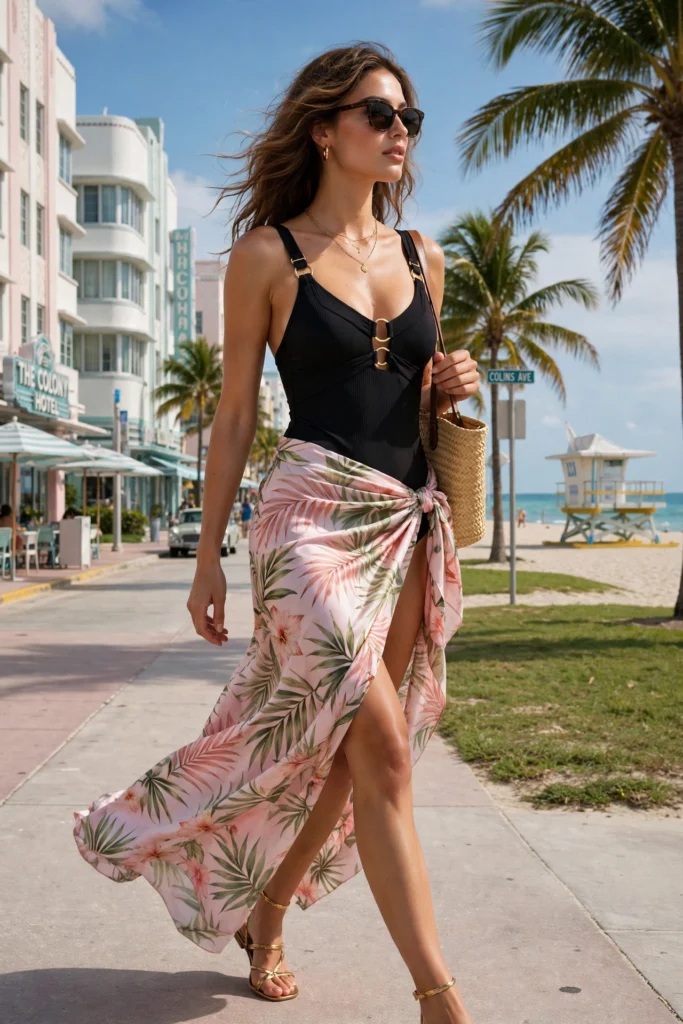
One-piece swimsuits have had a genuine comeback here. The modern Miami one-piece is sleek and well-cut, with a scoop back, a belted waist, or subtle cut-outs — worn by women in their twenties through their sixties. Athletic women wear sportier versions for paddleboarding in Biscayne Bay; style-focused women wear belted, textured versions — ribbed and crinkle fabrics are everywhere. A one-piece plus linen shorts plus an open shirt is the most repeated look on South Beach: it works for swimming, lunch, and the walk home.
Bikinis remain the other half of the beach, running classic — triangle, bandeau, high-waisted bottoms, sporty scoop tops — in saturated colors like coral, turquoise, and red, plus leopard and tropical prints. But Miami women rarely wear a bikini alone beyond the towel. The styling around it is the outfit: a sarong tied as a skirt, an oversized shirt worn open, a crochet cover-up, a hat, real sunglasses. The bikini is the base layer, not the whole look — a rule Miami beach fashion women treat as second nature.
Fit and function get taken seriously because the suits get used hard — salt water, chlorine, sunscreen, volleyball, repeat. Women buy for support and stay-put construction as much as color. Underwire tops are popular for a polished silhouette; fuller-coverage bottoms dominate family beaches in Mid-Beach and North Beach, while South Beach skews more fashion-forward.
Prices tell an honest story. A decent mainstream suit runs $40–$90. Mid-range labels Miami women actually repurchase sit around $90–$180, with bikini pieces sold separately at $45–$80 each. Designer swim climbs to $250 and beyond. But a Miami woman might swim 100 days a year, so cost-per-wear on a $150 suit beats a $30 suit that fades by July.
Choosing the right suit. Local fitting-room logic starts with one question: what will you actually do? Lap swimming and paddleboarding demand secure straps and real support — sporty one-pieces and racerback tops earn their keep. Beach-club afternoons reward the belted one-piece or textured bikini. Women who prefer more coverage choose high-waisted bottoms or ruched one-pieces. Buy top and bottom as separate decisions — most women aren’t the same size on both halves. Try the suit sitting, bending, and walking; the suit that behaves in motion comes home.
2. The Cover-Up System: Sarongs, Beach Dresses, and Resort Layers
If swimwear is the base, cover-ups are the wardrobe — the part of Miami beach fashion women have genuinely systematized, and worth copying wherever you live.
The sarong is the hardest-working item on the beach. One rectangle of fabric becomes a long skirt, a short skirt, a halter dress, a shawl for a chilly café, or a head wrap against the midday sun. Miami women tie them with intent — knotted at the hip over a one-piece, or as a skirt with a bikini top and an open shirt. Cotton and rayon sarongs cost $15–$35 and take zero suitcase space, so experienced travelers pack three.
Beach dresses are the second pillar — real dresses, cut for heat: smocked sundresses, tiered cotton midis, breezy shirt dresses, crochet styles worn over swimwear so the suit becomes part of the design. In Miami, the beach dress must survive a full itinerary: morning swim, lunch on Española Way, the Pérez Art Museum, a golden-hour drink. Our roundup of the Best Summer Dresses for Women in the USA includes several styles locals rotate for this beach-to-lunch life.
Resort wear ties the system together for hotel and beach-club settings. Matching sets — a printed camp shirt with its shorts, a linen vest with wide-leg pants — read polished at the Standard or the Faena pool deck. Kaftans serve women who want full coverage with full glamour. Prices: cover-ups and sarongs $15–$60, beach dresses $40–$120, sets $90–$200, designer kaftans from $250. This layering is the heart of Miami beach fashion women rely on daily.
Accessories finish it: flat leather sandals or slides, never heels on sand; a straw tote; a wide-brim hat — in this sun, equipment, not decoration; and reef-safe sunscreen, encouraged since Miami Beach banned certain chemicals to protect the reefs. The West Coast runs a cousin of this system — see Los Angeles Fashion Style: How LA Women Dress Every Day for LA’s cooler, more muted version.
A day at South Beach. The system stacks into a full day: a sporty one-piece for the 8 a.m. swim, the same suit under a sarong skirt and open shirt for an 11 a.m. cafecito, the styled bikini and crochet cover-up at a 2 p.m. beach club, and the wrap dress from the tote for dinner. Two outfit changes, four outfits — that ratio is the genius of Miami beach dressing.
3. Where Miami Women Shop: Real Stores, Real Prices, Real Strategy
Beach fashion this serious requires supply lines. Here’s the shopping map, from budget to splurge.
The everyday work horses are the big accessible brands. Target’s swim section is a genuine Miami institution for $15–$40 pieces that survive a season, and stores along Lincoln Road and at Dolphin Mall and Dadeland Mall cover the mainstream middle: $40–$120 suits, cover-ups, and sets.
The local layer is where Miami gets interesting. Independent swim boutiques in South Beach and Coral Gables stock the mid-range labels residents swear by — better fabrics, serious construction, $90–$200 suits — and the staff will actually fit you, which matters more in swimwear than anywhere else. Vintage spots in Little Haiti supply printed shirts, sarongs, and one-of-a-kind cover-ups.
At the top end, the Design District and Bal Harbour Shops serve the designer tier Miami beach fashion women splurge on — $250+ swim, silk resort sets, and the kaftans that end up in Art Basel photos.
Strategy matters more than budget. Buy swim on sale in September and October, when stores clear for resort season. Own at least two suits so one is always dry — in this humidity, a damp suit stays damp at noon. Spend first on fit, second on the cover-up, last on trends. As Harper’s Bazaar fashion coverage has noted, if a style survives a South Beach summer, it sells everywhere the next year.
Swim Week and December. Every July, Miami Swim Week turns the city into the swimwear industry’s world capital: designers show next year’s suits and local women preview what’s coming. December is a second swim season — resort collections land at $60–$150 for mainstream labels, and locals buy the one special suit of the year then.
4. From Sand to Street: Evenings, Neighborhoods, and Practical Survival Tips
The beach day ends, but Miami doesn’t change tempo — so the wardrobe pivots. The classic move is the two-change evening: swimsuit and cover-up all day, then a real dress for dinner, with heels and earrings that lived in the tote. Satin slip dresses in mango or fuchsia, a clean sundress with better sandals, a matching set with jewelry added. Ocean Drive after dark is warm-weather glamour — breathable fabrics, bare shoulders, hair braided for the water. That sand-to-street pivot is Miami beach fashion women practice better than anyone.
Neighborhoods bend the rules their own way. Brickell takes the polished end — tailored cover-ups, chic one-pieces, rooftop pools. Coral Gables leans classic: elegant swim, pearl studs, garden lunches. Wynwood treats beach pieces as streetwear — printed swim tops under open shirts with bike shorts and sneakers. Little Havana brings color and vintage joy along Calle Ocho.
Now the practical survival list. Sunscreen is fashion infrastructure: Miami sun burns in February, so SPF 30+, reapplied after swimming, keeps skin — and every outfit — looking better. Respect the afternoon storm: summer thunderstorms around 3 or 4 p.m. make that museum and long-lunch hour. Rinse the suit: a thirty-second rinse in fresh water doubles its life. Watch the water flags: purple means stinging marine life is present.
Coverage at Elle’s fashion and style coverage regularly returns to Miami: few cities merge beach life and nightlife into one wardrobe. For the glamorous end, our breakdown on How to Style a Bodycon Dress covers the dinner-and-clubs side of the Miami night.
Miami beach culture visibly includes everybody — grandmothers in elegant one-pieces and wide hats, new mothers in supportive high-waisted bikinis, athletes built like swimmers because they are swimmers. Coverage is a styling choice here: rash guards and swim leggings for women who surf, paddle, or burn in eleven minutes. Final word: confidence is the house style. Buy the suit that fits the life you’re actually living. Tie the sarong. Walk out like the beach was expecting you. In Miami, it was.
Conclusion
Miami beach fashion works because swimwear is treated as real clothing: chosen carefully, styled deliberately, and layered into outfits that run from a morning swim to a midnight dinner. The one-piece or bikini is the base. The sarong, cover-up, or beach dress is the styling. The tote of smart things is the strategy.
Copy the system anywhere the sun shines: invest in fit, own two suits, let one fabric rectangle do five jobs, and dress like the beach is part of your life. Or pack it as a capsule — two swimsuits, two sarongs, an oversized white shirt, a crochet cover-up, two beach dresses, a matching set, and one evening dress — and you’ve got two weeks of outfits from a dozen pieces.
Frequently Asked Questions (FAQs)
Q1: What swimwear do women in Miami actually wear?
A1: A mix of sleek one-piece swimsuits — belted, ribbed, and scoop-back styles — and classic bikinis in bold colors and prints. One-pieces often double as tops under shorts or skirts, while bikinis are almost always styled with a sarong, open shirt, or cover-up.
Q2: How much does a good swimsuit cost in Miami?
A2: Mainstream suits run $40–$90, quality mid-range labels residents repurchase cost about $90–$180, and designer swim starts around $250. Locals buy on sale in September and October and prioritize fit, since a Miami suit may be worn 100 days a year.
Q3: What is a sarong and how do Miami women wear it?
A3: A sarong is a large rectangle of light fabric, usually $15–$35, tied in multiple ways: as a long or short skirt over a swimsuit, as a halter-style beach dress, as a shawl in air-conditioned restaurants, or as sun protection for shoulders and hair.
Q4: What should I wear from the beach to a restaurant in Miami?
A4: Start with your swimsuit as the base, add a beach dress, matching set, or sarong-and-shirt combination, swap wet sandals for clean flat or heeled sandals, and add simple gold jewelry. That covers most beachfront lunches and casual dinners without a full change.
Q5: Where do Miami women buy swimwear?
A5: Everywhere from Target and Lincoln Road’s national stores ($15–$120) to independent South Beach and Coral Gables boutiques for fitted mid-range suits ($90–$200), vintage shops in Little Haiti for unique cover-ups, and the Design District or Bal Harbour for designer swim.
Q6: How do I protect my swimsuit and skin during a Miami beach day?
A6: Rinse the suit in fresh water after every swim to protect its elastic, rotate at least two suits so each dries fully, and wear SPF 30+ sunscreen reapplied after swimming. Reef-safe sunscreen is encouraged in Miami Beach, and a wide-brim hat adds protection between swims.