
Introduction
The first cold morning of the year always catches me off guard. One week I’m fine in a jacket in Chicago; the next, the wind off Lake Michigan is cutting through my jeans and I’m digging through summer clothes wondering what happened. Most winter outfits for women don’t get built in a boutique in October — they get built in a hurry, on a freezing Tuesday, when the forecast says 22 degrees and you still have to look like a functioning adult by 9 a.m.
And winter here isn’t one thing. Minneapolis at minus-10 wind chill is a different problem from Seattle at 40 degrees with sideways rain, or Denver, where it can snow in the morning and hit 55 by lunch. So this guide is practical first: the coats that earn their closet space, the layering system that keeps you warm without the marshmallow feeling, boots and bottoms that survive slush, and the finishing pieces that stop a practical outfit from looking purely practical. Take what fits your climate. Skip what doesn’t — that’s the whole secret to winter outfits for women that actually work.
1. Start With the Coat: The One Piece That Does Most of the Work
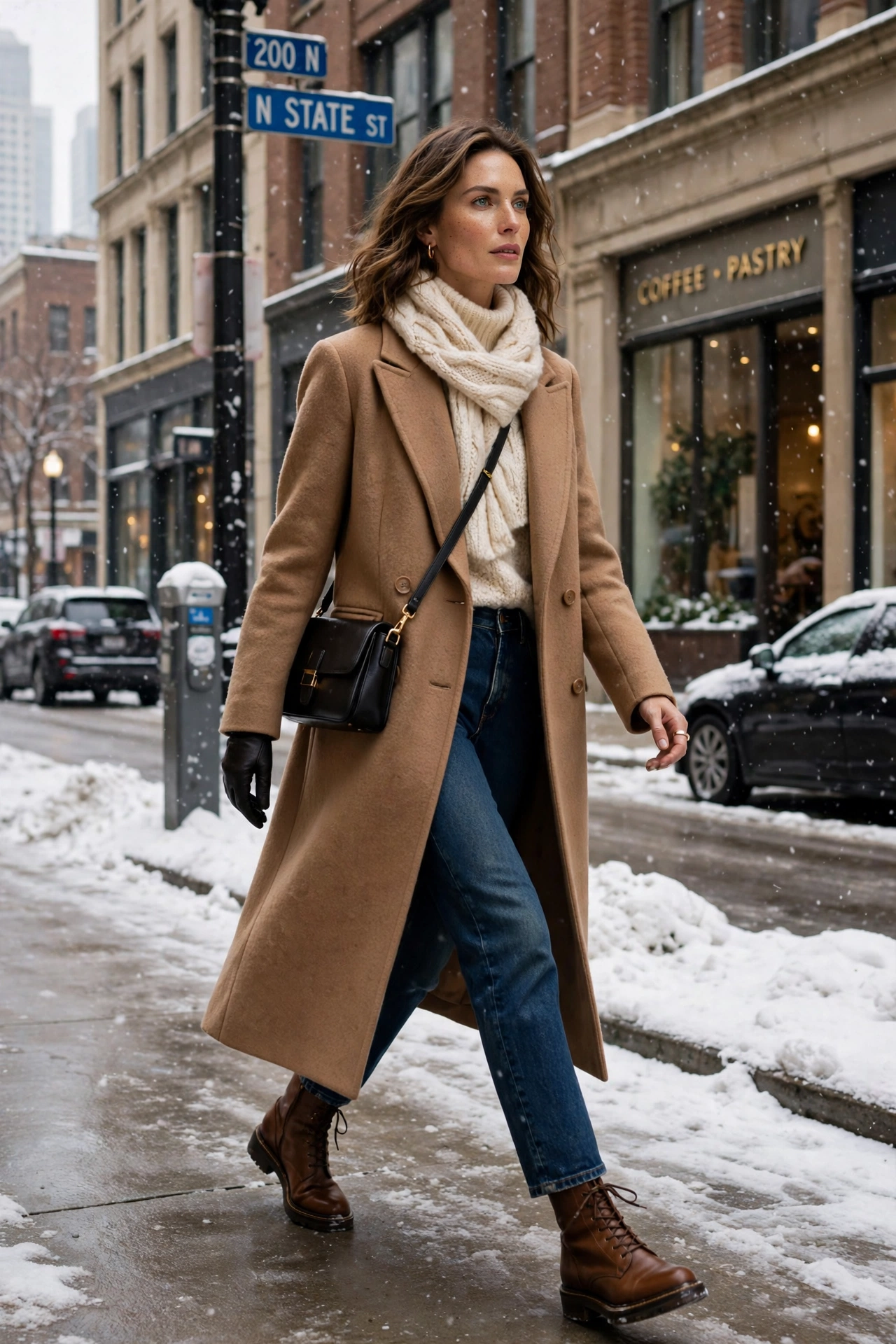
If you get the coat right, the rest of winter dressing gets easier. I learned this after two winters in a fashionable-but-thin peacoat in Boston — great in photos, useless in February. My rule now: buy warmth first, style second. For most of the Northeast and Midwest, a long wool coat is the workhorse. Look for mid-calf length, wool content (ideally 60% or more), and a lining that doesn’t feel papery. Camel, charcoal, and deep navy hide city grime and go with everything — a long wool coat over a sweater and straight-leg trousers is one of the most reliable winter outfits for women in America.
Then there’s the puffer, and the puffer has won. Walk through Minneapolis in January and nine out of ten women are in one. The 2026 difference is length: the long, ankle-length puffer — popularized by Aritzia’s Super Puff and available from Quince to Canada Goose — feels like wearing a sleeping bag, and I mean that as the highest praise. In Duluth, Fargo, Buffalo, and Anchorage, step up to a technical parka with a hood and subzero insulation from Patagonia, The North Face, or L.L.Bean, and keep everything underneath slim and simple. In Dallas, Nashville, or Los Angeles, a wool coat or quilted jacket with a sweater underneath covers most of the season.
Before buying: sit down in the coat and raise your arms like you’re reaching for a subway strap — if it pulls, it’s too small for layering. Check that the pockets fit gloves and a phone. And think cost-per-wear: a $250 coat worn 90 times a winter for five winters costs about 55 cents a wear, while the $60 coat that lets wind through by its second season is the expensive one. Black is the New York default because it hides salt stains, but burgundy, forest green, and chocolate brown read as neutrals and look warmer against winter skin.
2. The Layering System That Actually Keeps You Warm
Warmth doesn’t come from one thick sweater. It comes from layers — specifically from what touches your skin. I spent years piling a knit over a cotton t-shirt and wondering why I was cold; cotton holds moisture and loses insulation when damp. Start with a base layer instead: merino wool or a synthetic thermal, like Uniqlo’s Heattech or Smartwool, traps heat and wicks moisture. On bitter days in Chicago, Green Bay, or Burlington, a merino base under a regular sweater is the difference between “cold but fine” and “I need to go home.” Silk long underwear — Land’s End has sold it forever — adds warmth with zero bulk under blouses and dresses.
The middle layer is where your style lives: chunky fisherman knits, cashmere crewnecks, half-zip fleeces, a black turtleneck under everything. This layer is visible, so it’s where color and texture happen. One warning for wet-winter cities: 40 degrees in Seattle or San Francisco can feel colder than 25 in Denver sun, because moisture pulls heat away. There, wool — which insulates even when damp — under a water-resistant shell beats a down jacket, since down loses its warmth when wet.
Don’t forget the bottom half. Fleece-lined tights might be the single best buy in all of winter outfits for women — they look like regular tights and feel like pajamas, and with a sweater dress and knee-high boots you can walk into a holiday party in Cleveland warm. Thermal leggings under jeans are the Midwest standard, wide-leg trousers hide a base layer, and corduroy or wool-blend trousers are warmer and sharper than denim. Finally, your extremities decide how warm you feel: a hat over your ears, a scarf you can pull up, real gloves.
If you’re building from scratch, the approach in our Capsule Wardrobe for American Women: 30 Pieces, Endless Outfits translates well to winter. And as coverage at Vogue’s winter fashion and coat coverage notes every season, the women who look best treat their clothes as a system, not individual outfits bought in a panic.
3. Boots, Bottoms, and Surviving Slush Season
Winter style in America is decided at ground level — salt, slush, black ice, and six-inch mystery puddles at every Manhattan crosswalk. Real snow boots are non-negotiable in snow-belt cities: Sorel, L.L.Bean, and Columbia dominate for waterproof construction, insulation, and soles with grip. The Bean Boot is a New England birthright, seen on college students in Burlington and commuters in Boston, and it looks right with cuffed jeans, leggings, and a sweater. Dressing for the weather reads as style anyway.
For cold-but-not-snowing days, leather ankle boots and knee-high boots do the heavy lifting. A waterproof leather chelsea boot is the single most useful winter shoe a city woman can own, and knee-high boots — a strong trend again in 2026 — add warmth over skinny-straight jeans or with midi sweater dresses. Treat leather with waterproofing spray before the season and wipe salt off at home; salt destroys leather quietly, then all at once, usually in February. Sneakers are a climate gamble: all season in Los Angeles, Austin, or Miami, fine most days in Denver, but in New York the move is commuting in weatherproof boots and changing into shoes at the office.
Bottoms matter more in winter than any other season. Dark denim hides slush splashes, and a hem that clears the ground by half an inch saves your look by 5 p.m. Wool trousers for work, corduroys for weekends, ponte pants and lined leggings for everything else. And the midi sweater dress with tall boots is the closest thing winter has to a one-and-done outfit — it works for church in Atlanta, brunch in Portland, and a December date night in Chicago. If you build cold-weather looks around dresses, our guide to Fall Fashion for Women in the USA: 18 Autumn Outfit Ideas is the natural starting point. Care note: wash wool less than you think, store cashmere folded, and keep a $15 boot tray by the door — winter clothes are the most expensive clothes we own.
4. The Finishing Touches: Color, Accessories, and Getting Through February
By mid-January, most women I know hit the same wall: the system works, the clothes are warm, and everything is black, grey, and navy under a grey sky. The last stretch of styling winter outfits for women isn’t about warmth. It’s about morale — and that’s where accessories and color stop being extras. An oversized wool or cashmere-blend scarf in a warm plaid, rich red, or cream can sit over a black coat you’ve worn forty days straight and make it look deliberate. Learn two ways to wear it — looped once, or wrapped fully — and stop there.
Hats deserve honesty: I resisted beanies for years over hat hair, and spent those years cold instead. The compromise is a good knit beanie for cold days and earmuffs or a wide headband when your hair has to survive — both protect your ears, the part that hurts in wind. With gloves, mittens are warmer because your fingers share heat, while tech gloves win on commute days; many women own both and choose by the day’s errands.
Color is the fastest February fix there is. You don’t need a new coat — you need one bright thing: a red scarf, a cobalt beanie, a jewel-tone sweater under the same grey coat. Stylists at Who What Wear’s winter outfit ideas make this point constantly: standout winter outfits for women come down to one confident color or one interesting texture against a neutral base — patent boots against matte wool, a faux-fur collar against a plain puffer. For winter evenings, wear your longest, warmest coat over the dress without apology and check it at the door; underneath, a long-sleeve velvet midi is warm in a way a satin slip is not in Duluth.
One last habit: shop winter in two rounds — essentials in the fall, in your size, before the good coats sell out by Thanksgiving, then upgrades in late January and February, when everything left goes on serious sale.
Conclusion
Strip away the trends and winter dressing in America comes down to a few unglamorous truths. Your coat is your outfit for about four months, so buy the warmest good one you can. Layers only work if the first one is right. Your boots have to respect your weather, whether that’s a Buffalo lake-effect storm or a Seattle drizzle. And sometime in February, one good accessory in a real color will do more for your mood than a whole new wardrobe. The woman in Omaha in a long puffer and a scarf is dressed as well as the woman in a camel coat on Madison Avenue — both dressed for their real life, in their real weather. That’s what the best winter outfits for women actually look like. Warm first. Yourself, always.
Frequently Asked Questions (FAQs)
Q1: What is the warmest type of coat for women in very cold US states?
A1: For places like Minnesota, North Dakota, and upstate New York, an insulated parka or a long down puffer with a hood is the warmest choice. Look for real down or synthetic fill, a length that covers your thighs, and features like storm cuffs and a two-way zipper.
Q2: How do I wear dresses in winter without freezing?
A2: The formula is a long-sleeve sweater dress or velvet dress, fleece-lined tights, and knee-high boots under your longest coat. The fleece-lined tights are the key piece — they look like regular tights but insulate like leggings — and it’s the dress version of the layering system behind most warm winter outfits for women.
Q3: Are fleece-lined tights really warmer than regular tights?
A3: Yes, noticeably. Regular tights are a layer of nylon, which does almost nothing against cold air. Fleece-lined versions have a soft brushed interior that traps warm air against your skin. Most women who try them in cold states stop wearing regular tights in winter entirely.
Q4: What boots are best for walking in snow and slush?
A4: Choose waterproof, insulated snow boots with a lugged rubber sole from brands like Sorel, L.L.Bean, or Columbia if you regularly walk through snow. For cleared city sidewalks and light slush, waterproof leather chelsea boots are usually enough. Avoid smooth leather soles and suede on wet days.
Q5: How many winter coats does a woman actually need?
A5: Most women in cold climates do fine with two: one warm everyday coat — a long puffer or parka — and one dressier wool coat for work, dinners, and events. In mild climates like the Southeast or coastal California, one mid-weight coat is plenty. Each coat must fit over your thickest sweater.
Q6: When is the best time to buy winter clothes on sale in the USA?
A6: The deepest discounts run from late January through February, when retailers clear space for spring — that’s the time to buy next year’s coat, boots, and cashmere, though sizes are picked over. For essentials in your size, buy in October or early November, or watch Black Friday sales.