
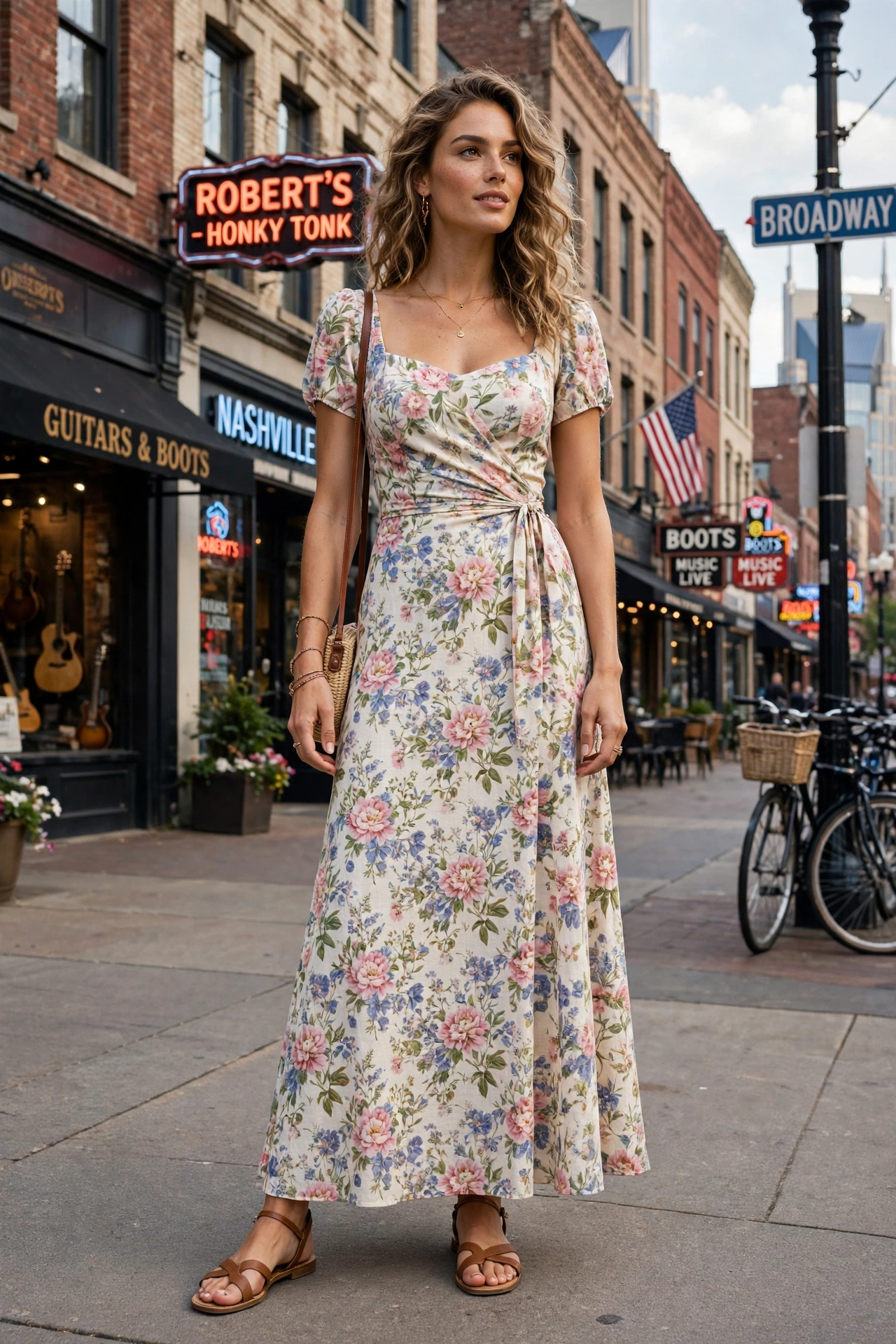
Introduction
Learning how to wear a maxi dress well comes down to one thing most guides skip: proportion. The dress is a full column of fabric from shoulder to ankle, so everything you add either balances that column or gets swallowed by it. Get it right and a maxi becomes the easiest outfit you own.
I say this as a convert. For years I avoided maxis because I’m 5’4″ and assumed they were for tall women only. Then a stylist friend in Nashville put me in a fitted knit maxi with a cropped jacket and flat sandals, and I’ve owned at least three ever since. The dress wasn’t the problem — my styling was. This guide covers fit first, then shoes and layers, then how to wear a maxi dress through spring, summer, fall, and winter, from Phoenix heat to a Boston November.
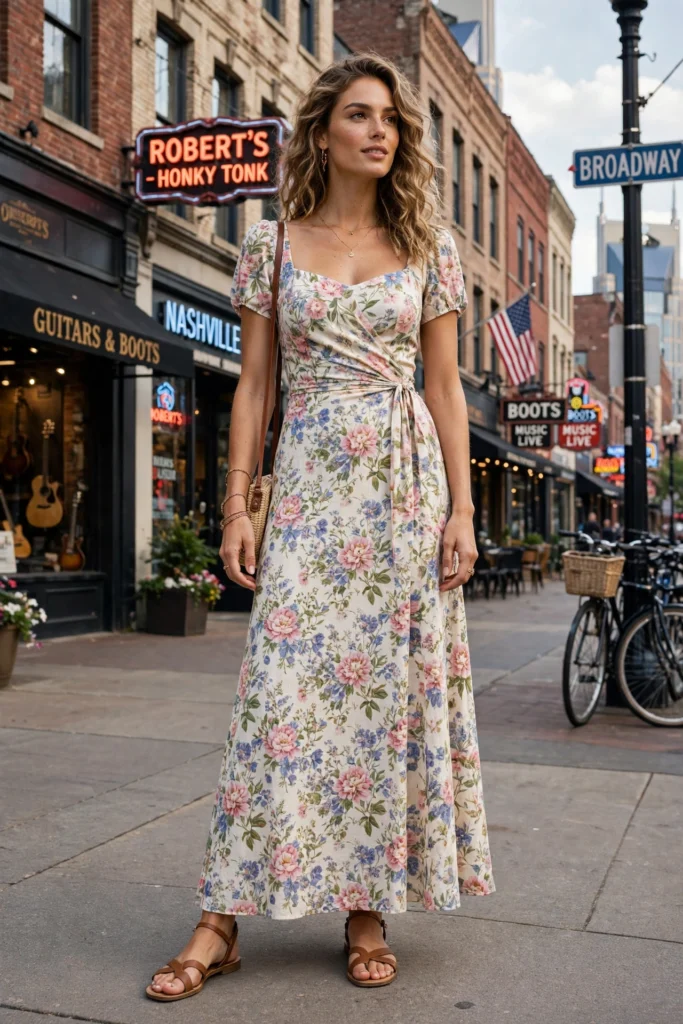
1. Fit First: Length, Silhouette, and Your Body Type
Length is the rule women break most when learning how to wear a maxi dress. It should skim the top of your shoes or end at the ankle bone. If it drags, it reads sloppy and you’ll trip on stairs; if it stops mid-shin, it’s an awkward midi. Hemming is a cheap fix — most tailors handle it for the price of a nice lunch — and flat-sandal wearers and heel wearers genuinely need different lengths.
Silhouette decides who the dress flatters. A fitted bodice with a flowing skirt works on nearly everyone because it defines the smallest point and lets the rest move. Column maxis in knit skim straighter figures and taller frames. Wrap maxis earn their following honestly: the adjustable waist creates shape on curvy bodies and adds it on straighter ones. Tiered, boho maxis carry the most volume, so balance them with a defined shoulder or a belt. Fabric matters too: light cotton, rayon, and jersey flow and forgive, stiff fabrics add visual bulk, and knit maxis travel without wrinkling — which is why they dominate vacation photos from Charleston to San Diego.
Petite, Curvy, and Tall: Scale It to You
Petite women, hear me: you can absolutely wear this dress. Choose smaller prints, a V-neck or vertical details, and a defined waist — even a slim belt changes everything. Skip floor-sweeping tiered styles in giant prints; they wear you. Curvy women often do best in a wrap or empire cut with skirt movement that skims rather than clings. Tall women get the opposite advice: you can carry the volume, bold prints, and dramatic sleeves, so enjoy them.
Prints, Colors, and Necklines
Print scale follows body scale — small, dense prints suit petite dressers, large tropical prints need a taller frame. Vertical patterns lengthen; horizontal tiers shorten and widen. A solid dark maxi is elegant but possibly severe, which is why black maxis love a belt or statement earring. Check a white maxi in daylight for opacity. V-necks are the safest first maxi; halters balance fuller skirts; high necks demand fluid drape. Underneath, wear a strapless bra that stays put and a short slip under anything sheer.
2. Shoes and Layers: The Two Decisions That Make or Break It
Shoes answer to the dress’s length and the occasion, and they’re central to how to wear a maxi dress without looking slept-in. Flat sandals are the classic partner — clean leather slides keep a summer maxi breezy. Wedges and espadrilles add height without sinking into grass, so they’re the standard for outdoor weddings. Sneakers sound wrong until you see a knit maxi with clean white sneakers and a denim jacket in Portland or Brooklyn. Boots change the personality: ankle boots toughen a floral maxi for fall, tall boots turn a sweater-dress maxi winter-serious. The full matrix lives in our guide to the Best Shoes to Wear with Dresses. One caution: a stiletto under a casual cotton maxi looks like two outfits met by accident — choose a wedge or block heel instead.
Layers solve warmth and waist definition. A cropped denim jacket lands right at the waist and restores your shape over all that skirt. Leather jackets do the same with edge, especially over florals in fall. Long cardigans work worn open, but belt the dress underneath or the silhouette becomes a rectangle. A soft, unlined blazer over a knit maxi reads polished enough for creative offices and nice dinners.
Belts, Jewelry, Bags, and Hair
A belt at your natural waist is the fastest transformation here: shapeless becomes styled in four seconds. Wide belts suit boho dresses, slim leather belts suit everything else, and a chain belt over a black maxi still lands every time. For more finishing moves, see How to Accessorize a Dress.
Accessories need scale — timid pieces disappear against a maxi, oversized ones start a fight. Long pendants echo the vertical line; with a high neck, skip the necklace and let statement earrings carry it. A small crossbody or clutch keeps events clean, a straw tote suits beach maxis, and the oversized everyday tote fails universally. Loose waves suit boho maxis; a sleek low bun suits evening styles.
3. One Dress, Four Seasons: Styling a Maxi All Year
The maxi’s best-kept secret is that it’s a twelve-month dress in most of the USA. Here’s how to wear a maxi dress season by season — the styling rotates; the dress stays.
Spring is its home season. Floral and pastel maxis with a denim jacket and flat sandals cover Easter brunch in Atlanta to farmers markets in Santa Barbara. Add ankle boots and a light cardigan while mornings stay cool, and layer seriously in the Midwest, where spring can swing forty degrees in a day.
Summer simplifies: a breathable cotton or linen maxi, flat sandals, a wide-brim hat, done. In Arizona, Texas, and Florida, the maxi beats shorts, as women in Phoenix explain every June — loose fabric shades your legs, moves air, and protects skin in long sun. Choose natural fibers, cuts that skim instead of grip, and skip lined dresses in heavy humidity. Our Best Summer Dresses for Women in the USA roundup flags which fabrics survive a Southern summer.
Fall gets interesting. Swap sandals for ankle boots, add a leather or suede jacket, and shift to rust, olive, burgundy, and navy-based florals. A fitted turtleneck under a sleeveless maxi extends it a full season; a sweater knotted at the waist turns the skirt into the outfit’s base.
Winter requires honesty by region. In the South and coastal California, a knit maxi with tall boots and a real coat is complete. In Chicago, Minneapolis, or upstate New York, add thermal leggings underneath — invisible, life-changing — a sweater, and a long wool coat matching the dress’s length. A burgundy velvet maxi handles December parties without a sequin, and roundups at Elle’s dress and style coverage confirm the layered long dress outlasts every trend.
Transitional Weather and the In-Between Weeks
The hardest weeks are the seams between seasons — late March in Denver can hold snow and seventy degrees in the same week. Use a sandwich: a mid-weight maxi, a thin long-sleeve tee underneath on cold mornings, and a removable denim jacket, cardigan, or blazer on top. On wet days, pick the ankle-bone length and ankle boots, and keep hems out of puddles. In wind, heavier fabrics and fitted silhouettes misbehave far less than tiered ones.
4. Maxi Dresses for Real Occasions: Weddings, Work, Vacations, and Photos
Weddings are the maxi’s showcase. A formal maxi in satin, chiffon, or crepe suits black-tie-optional and garden weddings alike, and a floral maxi is practically the uniform of spring wedding guests from Virginia to California. Never wear white or anything that photographs white, match formality to the invitation, and choose shoes for the terrain — wedges for lawns, block heels for patios. Our Wedding Guest Dresses in the USA guide breaks down every dress code. For anyone wondering how to wear a maxi dress to a formal event, fabric and shoes do most of the answering.
Work is a yes, with conditions. A solid, structured maxi — knit, ponte, or shirt-dress style — reads professional in creative and business-casual offices with a blazer and loafers or ankle boots. Skip beachy prints, spaghetti straps without a layer, and anything sheer. In conservative offices, save maxis for Fridays or office parties.
Vacations are where maxis pay rent. One dress covers sightseeing, beach-to-lunch transitions, and dinner, and knit versions roll into a suitcase corner and come out unwrinkled. Metallic sandals and one good earring make it an entire resort-evening strategy. Photos love maxis too — portraits, maternity pictures, engagement shoots — because long lines elongate and solid jewel tones flatter nearly everyone outdoors, a point trends tracked by Vogue’s shopping and dress coverage keep confirming.
Shopping Smart: What to Pay and What to Check
US prices run from $25 fast-fashion specials to $300 designer pieces; the honest middle, $50 to $120, is where dresses survive multiple summers. In the fitting room, sit, walk stairs, raise your arms, and check fabric against the light. If it needs a bra you wouldn’t buy, that’s part of the price. Wash rayon cold, hang dry, and store knits folded.
Maxis for Changing Bodies
Empire and wrap maxis adapt through pregnancy, then handle nursing access and changing shapes afterward — and the same logic serves women after surgery or during weight changes. A forgiving one-piece outfit that asks nothing of your waistline on a hard day is clothing doing its kindest work. Before buying, run the checklist: hemmed to your shoes, waist defined, fabric that moves, one matching layer.
Conclusion
Knowing how to wear a maxi dress is really knowing three small skills: choose a length and silhouette that respect your proportions, pair shoes and a layer with intention, and adjust both for the season in front of you. None of it is complicated, and all of it is learnable in one fitting-room session.
Start with one well-fitted dress in a fabric that moves, style it for the season you’re in, and watch how often you reach for it — to weddings, to work, to dinners, to ordinary Tuesdays when you want to look like you tried without actually trying hard. Give it the right length, the right shoes, and one honest layer, and it will quietly outwork half your closet. That’s not a trend. That’s a wardrobe cornerstone.
Frequently Asked Questions (FAQs)
Q1: How do I wear a maxi dress if I am petite?
Choose smaller prints, V-necklines or vertical details, and a defined waist with a belt or fitted bodice. Hem the dress to skim your shoes, and favor fit-and-flare or wrap silhouettes over voluminous tiered styles, which can overwhelm a smaller frame.
Q2: What shoes go best with a maxi dress?
Flat sandals for summer, wedges or espadrilles for outdoor events, clean sneakers with knit maxis for casual days, ankle boots in fall, and tall boots in winter. Avoid stilettos with casual cotton maxis — wedges and block heels balance proportions better.
Q3: Can I wear a maxi dress in winter?
Yes. Choose knit or velvet maxis, layer thermal leggings underneath, add tall boots, a sweater or long wool coat, and match coat length to dress length. In milder Southern and coastal climates, boots and a coat alone complete the outfit.
Q4: How long should a maxi dress be?
It should skim the top of your shoes or end at the ankle bone. Dragging hems look sloppy and cause tripping, while mid-shin length stops reading as a maxi. Hemming is inexpensive and makes the biggest difference, so hem for your most-worn shoes.
Q5: Is a maxi dress appropriate for a wedding?
Very often, yes. Satin, chiffon, or crepe maxis suit black-tie-optional weddings, and floral maxis are ideal for garden and spring ceremonies. Avoid white or near-white colors, and match shoes to the terrain — wedges for lawns, block heels for hard surfaces.
Q6: Can I wear a maxi dress to the office?
In business-casual and creative offices, a solid, structured maxi in knit or ponte works well with a blazer and loafers or ankle boots. Avoid beach prints, thin straps without a layer, and sheer fabrics. In conservative offices, save maxis for Fridays or parties.